7/21/2024

2024 Mckinsey’s business book recommendations

2024 Mckinsey’s business book recommendations. The Formula: How Rogues, Geniuses, and Speed Freaks Reengineered F1 into the World’s Fastest-Growing Sport by Joshua Robinson and Jonathan Clegg Design Social Change: Take Action, Work Toward Equity, and Challenge the Status Quo by Lesley-Ann Noel What I Learned About Investing from Darwin by Pulak Prasad How Legendary Leaders Speak: 451 Proven Communication Strategies of the World’s Top Leaders by Peter D. Andrei Inner Drive: From Underdog to Global Company by Arsen Tomsky The Journey of Leadership: How CEOs Learn to Lead from the Inside Out by Dana Maor, Hans-Werner Kaas, Kurt Strovink, and Ramesh Srinivasan Possible: How We Survive (and Thrive) in an Age of Conflict by William Ury What Went Wrong with Capitalism by Ruchir Sharma All added to the wish-list or directly to the library Happy readings https://www.mckinsey.com/Featured-Insights/Themes/your-next-business-read-might-be-on-this-list?cid=other-eml-alt-mip-mck&hlkid=5de9250cb51847b3b4ad3a5959a283dc&hctky=3011708&hdpid=1fd2e958-1d57-4298-85ce-a59ca9233bf7

- Pedro

Read on Substack

Finalized How to Decide: Simple Tools for Making Better Choices by Annie Duke -> Book Rating - 3/ 5

Finalized How to Decide: Simple Tools for Making Better Choices by Annie Duke Book Rating - 3/ 5 Review to come shortly. “…Through a blend of compelling exercises, illustrations, and stories, the bestselling author of Thinking in Bets will train you to combat your own biases, address your weaknesses, and help you become a better and more confident decision-maker. What do you do when you're faced with a big decision? If you're like most people, you probably make a pro and con list, spend a lot of time obsessing about decisions that didn't work out, get caught in analysis paralysis, endlessly seek other people's opinions to find just that little bit of extra information that might make you sure, and finally go with your gut. What if there was a better way to make quality decisions so you can think clearly, feel more confident, second-guess yourself less, and ultimately be more decisive and be more productive? Making good decisions doesn't have to be a series of endless guesswork. Rather, it's a teachable skill that anyone can sharpen. In How to Decide, bestselling author Annie Duke and former professional poker player lays out a series of tools anyone can use to make better decisions. You'll learn: • To identify and dismantle hidden biases. • To extract the highest quality feedback from those whose advice you seek. • To more accurately identify the influence of luck in the outcome of your decisions. • When to decide fast, when to decide slow, and when to decide in advance. • To make decisions that more effectively help you to realize your goals and live your values. Through interactive exercises and engaging thought experiments, this workbook helps you analyze key decisions you've made in the past and troubleshoot those you're making in the future. Whether you're picking investments, evaluating a job offer, or trying to figure out your romantic life, How to Decide is the key to happier outcomes and fewer regrets. …” https://www.goodreads.com/book/show/51066664

- Pedro

Read on Substack

Starting a new book - 12 Rules for Life: An Antidote to Chaos by Jordan B. Peterson

Starting a new book! 12 Rules for Life: An Antidote to Chaos by Jordan B. Peterson “… #1 NATIONAL BESTSELLER #1 INTERNATIONAL BESTSELLERWhat does everyone in the modern world need to know? Renowned psychologist Jordan B. Peterson's answer to this most difficult of questions uniquely combines the hard-won truths of ancient tradition with the stunning revelations of cutting-edge scientific research.Humorous, surprising and informative, Dr. Peterson tells us why skateboarding boys and girls must be left alone, what terrible fate awaits those who criticize too easily, and why you should always pet a cat when you meet one on the street.What does the nervous system of the lowly lobster have to tell us about standing up straight (with our shoulders back) and about success in life? Why did ancient Egyptians worship the capacity to pay careful attention as the highest of gods? What dreadful paths do people tread when they become resentful, arrogant and vengeful? Dr. Peterson journeys broadly, discussing discipline, freedom, adventure and responsibility, distilling the world's wisdom into 12 practical and profound rules for life. 12 Rules for Life shatters the modern commonplaces of science, faith and human nature, while transforming and ennobling the mind and spirit of its readers. …” https://www.goodreads.com/book/show/33792742-12-rules-for-life

- Pedro

Read on Substack

7/17/2024

Do you want to learn Business & Management? Read the classics (by the Economist)

Must confess that articles like this one, make my Economist subscription worth every cent I pay. More than the weekly events, although relevant as they are, is on these kinds of articles that my utility maximization supports the yearly price paid. So, if you want to learn business & management why don’t you turn to the Classics? Leadership - read “Things Fall Apart” by Chinua Achebe. Mentorship - “Inferno” by Dante - Character Virgil Motivation - “Tom Sawyer” by Mark Twain HR or Finance - Catch-22 by Joseph Heller or The Trial by Kafka IT Support - Waiting for Godot by Samuel Beckett Digital Transformation - Frankenstein by Mary Shelley Leadership, what to avoid - Richard III and Macbeth by Shakespeare Succession Planning - King Lear by Shakespeare How to choose a PA - Othello by Shakespeare What not to do as a CEO - Moby-Dick by Herman Melville character Captain Ahab How to be a best manager - Fezziwig character from Charles Dickens’s “A Christmas Carol”: The need to have Candid Conversations -Bartleby, the Scrivener by Melville Happy readings! https://www.economist.com/business/2024/07/11/the-ceos-alternative-summer-reading-list

- Pedro

Read on Substack

7/15/2024

EU sets new hefty tariffs to Chinese EV. Will that generate a net value to the EU economy?

The new tariffs form EV cars coming from China (from 26% up to 48% vs the current 10%) will at best give some time to the European carmakers to get up to speed, but will most probably result in several negative spillovers of such decision like: 1- Chinese retaliation to other industries (China will definitely not stay idle with significant downside effects on the overall economy). 2- European companies that are producing cars in China to export will be also affected. 3- The price premium that EV Chinese cars are being priced in Europe vs. China implies that there is big opportunity to those company to, for now, absorb the tariff impact (if not fully at least a significant part it) undermining the decision, leaving EU with just the downside of retaliation measures. Chinese cars will not go away, and the Chinese advantage has to be addressed by better competitive product/prices from their European peers and not by a tariff driven edge. https://www.economist.com/business/2024/06/12/the-eu-hits-chinas-carmakers-with-hefty-new-tariffs

- Pedro

Read on Substack

7/13/2024

ELO Rating - a quick introduction

Do you want a quick introduction to ELO rating in chess, how it is calculated, how can you understand your probabilities of winning vs another player and the points added or subtracted to your rating after each game? Here is a good starting point. The methodology and statistical rationale can be used in other games (football, basket, etc…) to predict end results and defining probabilities. Insightful one if you love to bet on sporting results and you like to play with statistics! Enjoy! https://youtu.be/AsYfbmp0To0?si=hKWu_UvjQ1OstMWP

- Pedro

Read on Substack

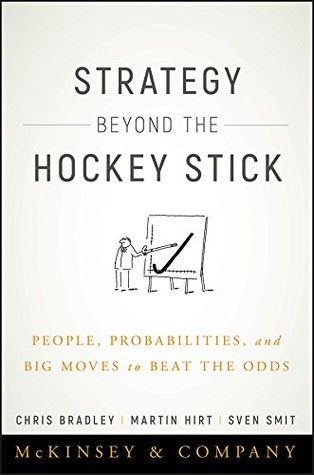
Strategy Beyond the Hockey Stick: People, Probabilities, and Big Moves to Beat the Odds by by Chris Bradley, Martin Hirt, Sven Smit

Book Review 5/5

Pedro Pinto's Reviews > Strategy Beyond the Hockey Stick: People, Probabilities, and Big Moves to Beat the Odds


Strategy beyond the Hockey Stick was a really pleasant surprise. Was expecting a book with some level of quality about strategy, coming from Mckinsey and Company, but got much, much more in this relative concise book (235 pages) that provides a clear framework on the key pillars that make a difference on your company performance and how a sound strategy process should be deployed.

It also presents the 10 key levers. divided in 3 broad categories, that one should be aware if he wants to make his company progress on the power curve distribution of value generation.

Consequently, this is a must-read book for every manager, whatever the ranking you currently have!

Unbundling the aforementioned, below you can find my insights divided in 2 key topics:

a) Assessment of your current strategic process, that leads into the following conclusions (any similarity with your reality is not a coincidence):

1- A cumbersome process that ends in a minimum 150 pages power point presentation that does not add much to the organization and business discussion.

2- A document / process that is not used to openly discuss the current business environment and to make key decisions, but to support and defend the current "status-quo" or the special project of a business unit, where every manager tries to maximize their own utility, and not a process to optimize the utility of the overall company. Each department makes a 20/30-minute presentation where there is no open discussion, but an exposure of what a division/area leader wants to share with the others (hockey sticks are the norm).

Subscribe now

3- A 150 page is produced that does not take into consideration the outside view, i.e. what are the macro-trends, what competition is doing (game theory), a strong PESTEL analysis is not done, and different scenarios are presented and is completely skewed to an "Inside View" with lot of details, but low value-added to the discussion.

4- Opaque document with no clear definition of the 3/5 big moves a company should pursue to achieve outstanding results, but just a maintenance of the status-quo and hoping that the macro environment tails the organization to a better performance vs. last year.

5- Non-value-added process to the organization, a missed opportunity with huge opportunity costs associated, with several Hockey Sticks where after an initial investment period the results will increase almost exponentially (unfortunately when you do a follow up of such plans, we usually see a graveyard of hairy-back outcomes),

6- Strongly biased process where you can usually find: (i) Halo Effect, (ii) Anchoring, (iii) Confirmation Bias, (iv) Champion Bias, and (v) Loss Aversion.

7- A document that proposes that the company will do a lot better next year, continuing to the same of this year.

8- A document that does not recognizes uncertainty in the market (ranges of predictive values vs. 1 number forecast), lacks a proper baseline to start the assessment, there are errors in performance attribution (good performance is always attributed to good management and bad performances to market conditions), amongst others.

Share

b) How can you change that reality?

1- Define the correct yardstick to manage your company performance. Choose the Economic Profit indicator while assessing your business. With that you ensure that you are properly measuring all the costs in your company, including the Cost of Capital, and with that you are generating value to your shareholders and the overall company. How many companies just measure their performance vs. EBIT or other financial performance indicator that just has an internal perspective into consideration.

2- Using this metric, we can clearly see that value creation distribution across industries is a power curve, that follows power laws principles, i.e. the tails of the value distribution curve raise or fall exponentially. You can see that behavior in several other data sets, like in economics, demographic, and nature. The companies on the top-quintile of the distribution capture >90% of the value created, thus you should strive to be there.

3- You should be cognizant that 50% of your company positioning on the power curve comes from your industry, thus it would be easier to be an average company in a great industry that an exceptional company in an average industry. However, you can find companies from several industry in the top 10% of the distribution.

Leave a comment

4- In order to move on the Value Power curve, you need to: (i) grow your business top-line and (ii) improve the ROIC. Only by playing with these 2 factors you will be able to improve your Economic Profit significantly.

5- You should be able to provide and determine probabilities to each strategic initiatives recognizing that some have a success probability of 90% but with limited and reasonable improvements on your ROIC and Top Line and others that have a lower probability of success (lets say 50%) but with huge payoffs. You should then measure and pay your managers accordingly with this probability framework and not treat all challenges the same way.

6- There are 3 key categories that make the difference in the Value Power curve distribution and should be addressed in your strategic process that are: Endowment (what you start with), Trends (what are the winds in your industry) and Moves (what will you do).

7- There are 10 key levers you can use to move along the value power curve distribution, that can be allocated as follows within the 3 categories:

Endowment: (i) Size of your company in terms of Total Revenue- the larger the better; (ii) Debt Level - the less debt you have the better you are prepared to seize the opportunities, (iii) Past Investment on R&D - you need to be on the top half of your industry in the ration R&D investment to Sales.

Trends: (i) Industry Trend - what is your industry average economic profit; (ii) Geographical Trend - to be present in key to growth geographical markets in terms of nominal GDP growth.

Moves: (i) Programmatic M&A - steady stream of deals to add value (investments and divestures); (ii) Dynamic Allocation of resources - ability to re-allocate resources within Business Units, (iii)Strong Capital Expenditures - to be above significantly above the industry average; (iv)Productivity Programs - reduce overheads and or improve labor productivity; (v)Improvements on differentiation - Business model innovation and pricing power.

8- Promote 8 key shifts in your strategic process: (i) from Annual Planning to Strategy as journey, (ii) from getting to a Yes to debating real alternatives, (iii) from peanut butter resource allocation to resource allocation to your 3/5 priorities, (iv) from approving budgets to making big moves; (v) from budget inertia to liquid resources; (vi) from sandbagging to open risk portfolios; (vii) from you are your numbers to holistic perspective on performance, (viii) from long-range planning to forcing the first step.

Subscribe now


Hopefully, you can now understand my strong recommendation and rating of this insightful book.


from Risk Premium https://ift.tt/32Rx0hm
via IFTTT