
Importance of History
Sometimes all we need is a good, meaningful look back to understand some basic economic concepts — no elaborate theorizing required.
If we want to identify the pillars that a currency must rest on to earn the status of world reserve currency, with all the privileges that entails, we need only study those that have played that role throughout the last few centuries. History, as usual, does the heavy lifting.
So what are those pillars? There appear to be three constant building blocks that the supporting country or economy must possess:
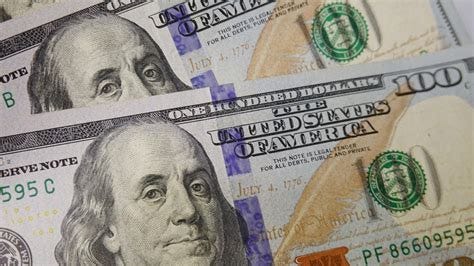
1. The ability to run a sustained trade deficit. The economy behind the reserve currency must consistently buy more than it sells. Anchored by a strong domestic market, it generates enough surplus capital to purchase goods and services from the rest of the world — and crucially, to pay for them in its own currency. This is how that currency becomes widely available beyond its borders, gains perceived value, and ends up being used in transactions between third parties who have nothing to do with the issuing country.
2. Military and economic hegemony. Hard and soft power work together to spread the currency’s reach, demand, and usage across other economies. Without this, trust is hard to project at scale.
3. Strong and independent institutions. These are the guardians of the currency’s value, capable of shielding it from short-term political temptations by controlling monetary flows and, with them, inflation. Their independence from the executive and legislative branches is what prevents those in power from debasing the currency for electoral convenience.
Apply this simple framework to the current holder of reserve currency status, the dollar, and one might reasonably conclude that the United States is working rather hard to disqualify itself. Two of the three pillars are under relentless and, at times, breathtaking attack, all under a strategy grandly branded as Make America Great Again.
People often say that ignorance can sometimes be a blessing. Unfortunately, in most cases, it is a curse — and one whose consequences fall not just on the ignorant, but on the lives of countless others who never asked to be part of the experiment.
Based on: “The decline and fall of the Roman currency empire”, The Economist, March 26, 2026.
https://ift.tt/0E1xs57
from Risk Premium https://ift.tt/CMlz8Pu
via IFTTT

No comments:
Post a Comment