2/01/2026

The Case for Structured Job Interviews (and Their Limits)

How to conduct a job interview https://www.economist.com/business/2025/12/18/how-to-conduct-a-job-interview From The Economist “…If you had to construct a really bad way to make an important decision, you might come up with something like the stereotypical job interview….” An interesting article by The Economist on job interviews, which reinforces—once again—that the most effective approach is the structured job interview, with two important caveats: 1-Structured interviews mean using a standardized set of job-related questions asked of every candidate, with responses evaluated against an agreed scoring system. 2-Even when well designed, job interviews—even if structured—are far from perfect predictors of on-the-job performance. They should therefore be complemented with other tools such as personality assessments, work samples, and thorough reference checks (the latter, from my own experience, being particularly valuable). “…if you are interviewing a stranger for a job, it is best done with a script, a scoring system and a hefty dose of realism….” (text revised by a llm)

- Pedro

Read on Substack

Are Western Fertility Rates Really Collapsing—or Are We Measuring Them Wrong?

Very interesting article by The Economist on fertility rates across the West over the past few decades. The commonly accepted view is that fertility has fallen significantly below the replacement rate (2.1 children per woman), implying that population decline in these regions is inevitable in the not-so-distant future. This article argues that the gap may not be as large as it appears, and that part of the issue lies in how the phenomenon is measured. In a nutshell, it comes down to the difference between Total Fertility Rate (TFR) and Completed Fertility Rate (CFR)—and how each is calculated. Put simply, the first indicator (TFR), which is the most widely cited, does not account for the fact that women are having children significantly later than in the past. This “tempo effect” skews results toward more dramatic declines. The second indicator (CFR) corrects for this timing issue. While it still shows a decline compared to the past, it is far less severe than what TFR suggests. From a data science perspective, this is a useful reminder: you always need to understand how your KPIs are constructed before interpreting trends. Otherwise, you risk mistaking timing effects for genuine macro-level shifts. The “sentient lizards” parable used to introduce and explain these concepts is a small masterpiece. Highly recommended reading. (text revised by a LLM) Watch who you’re calling childless https://www.economist.com/finance-and-economics/2025/12/18/watch-who-youre-calling-childless From The Economist

- Pedro

Read on Substack

The best podcasts of 2025 by the Economist

The best podcasts of 2025 https://www.economist.com/culture/2025/12/18/the-best-podcasts-of-2025 From The Economist Do you listen to podcasts? If yes, here’s a list of the ones the Economist considers the best for 2025. Needless to say, they all went straight into my “potential” playlist. I’ll give each one a try, and I’m almost certain that—like in previous years—some will earn a spot on my official rotation. 1- Articles of Interest 2- Final Thoughts: Jerry Springer 3- Fela Kuti: Fear No Man 4-Flesh and Code 5-Heavyweight 6-Missing in the Amazon 7-Past Present Future: Politics on Trial 8-The Protocol 9-Shell Game 10-The Wargame Hope it is helpful. (text revised by a llm)

- Pedro

Read on Substack

The Innovations That Could Change Lives—If We Notice Them

Sometimes you stumble upon articles that almost go unnoticed—even by you—and then, somehow, they resurface in your mind weeks or months later. This is one of them. A group of MIT engineers developed a new water-desalination system designed specifically for groundwater, powered almost entirely by solar energy and, crucially, without relying on batteries or the electric grid. The real breakthrough lies in how the system manages energy. Traditional desalination requires a steady, constant power supply. This new approach allows the process to automatically adapt its energy consumption to the amount of solar power available at any given moment during the day. At the time of publication, the system was able to adjust its operation within a three-minute window, dynamically matching energy use to sunlight. As of December 2024, the system was already sourcing about 77% of its required energy directly from solar panels—an improvement of roughly 91% compared to previous designs. The researchers believe they could reach close to 100% solar operation by reducing the adjustment window from minutes to second-by-second control. The potential impact of this technology is enormous. Imagine being able to provide affordable, desalinated drinking water to thousands of communities around the world that currently face severe water scarcity or lack reliable access to clean water altogether. Hopefully, this kind of innovation will move from prototype to widespread deployment in the near future—and, in doing so, meaningfully improve the lives of millions of people. It also makes you reflect on how many people are quietly working on deeply impactful R&D efforts—projects that, if successful, could transform living conditions for so many—yet remain largely unnoticed by the rest of the world. (text revised by a llm) https://news.mit.edu/2024/solar-powered-desalination-system-requires-no-extra-batteries-1008

- Pedro

Read on Substack

1/11/2026

What Caught My Attention This Week

This week, I decided to start a review of the things that caught my attention over the past week and that I think are worth sharing with you.

The plan is to make this a weekly or biweekly feature (still to be defined).

Some of these may resonate with you as well.

A few of the items I share here may later evolve into full posts.

Subscribe now

Currently reading:

1- Ethics by Benedict de Spinoza:

A profoundly beautiful and uniquely insightful description of the universe, Benedict de Spinoza's Ethics is one of the masterpieces of Enlightenment-era philosophy.

Published shortly after his death, the Ethics is undoubtedly Spinoza's greatest work - an elegant, fully cohesive cosmology derived from first principles, providing a coherent picture of reality, and a guide to the meaning of an ethical life. Following a logical step-by-step format, it defines in turn the nature of God, the mind, the emotions, human bondage to the emotions, and the power of understanding - moving from a consideration of the eternal, to speculate upon humanity's place in the natural order, the nature of freedom and the path to attainable happiness. A powerful work of elegant simplicity, the Ethics is a brilliantly insightful consideration of the possibility of redemption through intense thought and philosophical reflection. The Ethics is presented in the standard translation of the work by Edwin Curley. This edition also includes an introduction by Stuart Hampshire, outlining Spinoza's philosophy and placing it in context.

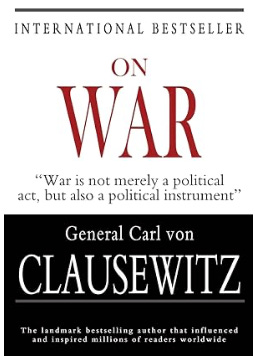
2- On War by Carl von Clausewitz:

Clausewitz had many aphorisms, of which the most famous is, "War is not merely a political act, but also a political instrument, a continuation of political relations, a carrying out of the same by other means," a working definition of war which has won wide acceptance.

Share


Podcasts that I found interesting

1- Reed Hastings - Building Netflix

2- The future of intelligence with Demis Hassabis

3- The arrival of AGI with Shane Legg

4- 10 yeats of Acquired (with Michael Lewis)

5- Sin noticias de Gurb

6 - Joan of Arc - Warrior Maid

7- Wagner: Live at the Royal Albert Hall

8- How to make a few more billion dollars: Brad Jacobs

9- Film club: our sci-fi favourites - https://ift.tt/048IMtE

10- Unfinished business (part 1): quantum physics turns 100

https://ift.tt/tlax9rk

11- Unfinished business (part 2): fixing the “biggest problem” in physics

https://ift.tt/CmBZeSE

12- A conversation with Binyamin Netanyahu

https://ift.tt/HPBmhkQ

13- The technologies to watch in 2026

https://ift.tt/K2HUN5u

14- How is AI changing warfare?

https://ift.tt/Luvfd0n

Leave a comment


Articles that I found interesting

1- Your Analytics team is dead man walking

Three Data Point Thursday
Your Analytics Team Is Dead Man Walking.
Read more

2- Highest-Paid Athletes in the World: Comparing Salary/Winnings with Endorsements


Videos that I found interesting

1- Panel Data Regression Tutorial

2- Chimamanda Ngozi Adichie, escritora. Desde África con amor

3- HPI 25: ‘Context is King’ When Interpreting Premier League Match Demands - Dr. Paul Bradley

https://ift.tt/O5ID9Mm


Movies videos that I found interesting

1- The Amateur


That’s it for this week. If any of these caught your attention—or if you’ve come across something worth sharing—feel free to reply or leave a comment.


from Risk Premium https://ift.tt/DCVjuyO
via IFTTT

The Art of Intelligence

Intelligence is like trying to assemble a 1,000-piece puzzle when you only have 250 of the correct pieces. On top of that, you’re surrounded by 5,000 pieces from other puzzles that do nothing but create noise. And yet, based on this incomplete and messy picture, you’re expected to provide an educated opinion on the subject.

A few months ago, I watched a MasterClass on The Art of Intelligence that I found extremely insightful. I took away several valuable “knowledge nuggets” that helped me better structure and challenge my thinking on this topic—and that I’ve since been able to apply to my day-to-day work.

Subscribe now

Below are my notes. Hopefully, they may also be of value to you.

1. What is analysis?

Analysis is not speculation or opinion. Analysis means systematically reviewing all available information, identifying what is relevant, and determining how it fits together to provide insight on a subject. In other words: which puzzle pieces matter, and how do they connect.


2. Sources of intelligence

There are two primary sources of intelligence:

  1. Human (people)

  2. Technical


3. Human vs. technical intelligence

Technical intelligence is important—mandatory, even. However, a good human source of intelligence will always outperform purely technical sources. The key is not access, but quality: the source must be reliable, informed, and credible.

Share


4. Relationships as a core skill

A defining trait of strong intelligence craftsmanship is the ability to build relationships with key people who can provide relevant and valid insights. This requires trust, which is built by using information consciously, correctly, and responsibly.


5. The importance of listening

Listening is a critical skill. You must:

  • Ask the right and most pertinent questions

  • Actively listen to what people—or the data—are telling you

Avoid forcing feedback to fit a pre-existing narrative. As a rule of thumb, follow the WAIT principle:
Why Am I Still Talking?


6. Building meaningful relationships with sources

  • Build trust through patience

  • Listen with undivided attention

  • Apply the WAIT principle

  • Avoid purely transactional relationships

  • Understand the other person’s challenges and motivations


7. Understanding deceit

Establish a baseline behavior for when human sources are telling the truth. As with lie detection techniques, truthful behavior tends to show low variance and consistent patterns. Deception, by contrast, often introduces higher variance, making patterns harder to maintain and identify.

Leave a comment


8. Creating a safe analytical environment

Create space for honest opinions within your team by:

  • Selecting the right people (avoid “yes-men”)

  • Giving your opinion last

  • Asking junior colleagues to speak first


9. Bias awareness

  • Acknowledge that everyone has biases—and understand their impact

  • Be especially alert to anchoring, confirmation, pendulum, groupthink, and mirroring biases

  • Always express conclusions with an explicit confidence level

  • Beware of compounding bias effects

  • Always factor in the motivations of your sources


10. Managing risk and uncertainty

  • Always keep the risk/uncertainty matrix in mind

  • Identify as many risks and uncertainties as possible

  • Develop mitigation plans for each

  • For more refer to my note:


11. Presenting your conclusions

  • Build personal, timely, and close resonance with the decision-maker

  • Use accessible language—even for complex or technical topics

  • Tailor your message to the decision-maker’s preferred decision-making process


Conclusion

Intelligence is not about having perfect information—it’s about making sense of imperfection. It requires discipline over instinct, listening over speaking, and humility over certainty. The real craft lies in knowing which puzzle pieces matter, which ones are noise, and how our own biases shape the picture we think we see.

Strong intelligence work is ultimately human work. Trust, relationships, and judgment matter as much as tools and technology. By creating safe spaces for dissent, questioning our assumptions, and clearly communicating uncertainty, we don’t just improve our analysis—we improve the quality of the decisions that follow.

In a world overloaded with data, the advantage belongs not to those who know the most, but to those who think the clearest.

(text revised by a LLM)


from Risk Premium https://ift.tt/FQYaKjP
via IFTTT

1/06/2026

Are We Living Inside a Sci-Fi Movie Already?

Are you a fan of sci-fi movies? Or are you curious about dystopian—or almost dystopian—visions of the future? If so, I highly recommend listening to a great episode of Babbage, the science podcast by The Economist. In it, The Economist’s science correspondents share their favorite sci-fi films—and it’s a fantastic list. Here are the movies they mentioned, along with my own thoughts: 1- Blade Runner (1982) My favorite movie ever. A timeless exploration of identity, technology, and what it means to be human. I also strongly recommend the sequel, Blade Runner 2049, which is surprisingly excellent. https://www.imdb.com/title/tt0083658/ 2- Ghost in the Shell Still on my watch list. There’s also a newer live-action version starring Scarlett Johansson, which has sparked mixed reactions. Curious to see how both compare. https://www.imdb.com/title/tt36934560/ 3- The Martian I’ve seen it and liked it—though it didn’t leave a lasting impression on me. Still, a solid and optimistic take on science and problem-solving. https://www.imdb.com/title/tt3659388/ 4- Dune (1984) I’ve watched it, but I much prefer the recent adaptation. That said, I would have loved to see the legendary version envisioned by Alejandro Jodorowsky, which was never made. https://www.imdb.com/title/tt0087182/ 5- Tenet I’ve already seen it, but it didn’t really make a mark. I might give it another try—some films demand a second viewing. https://www.imdb.com/title/tt6723592/ 6- The Matrix I really liked it. When I saw it for the first time, it made a huge impact on how I thought about reality, technology, and control. https://www.imdb.com/title/tt0133093/ 7- Colossus: The Forbin Project On my watch list. An early and unsettling take on AI, control, and unintended consequences—still very relevant today. https://www.imdb.com/title/tt0064177/ https://www.economist.com/podcasts/2025/12/24/film-club-our-sci-fi-favourites

- Pedro

Read on Substack