7/13/2024

ELO Rating - a quick introduction

Do you want a quick introduction to ELO rating in chess, how it is calculated, how can you understand your probabilities of winning vs another player and the points added or subtracted to your rating after each game? Here is a good starting point. The methodology and statistical rationale can be used in other games (football, basket, etc…) to predict end results and defining probabilities. Insightful one if you love to bet on sporting results and you like to play with statistics! Enjoy! https://youtu.be/AsYfbmp0To0?si=hKWu_UvjQ1OstMWP

- Pedro

Read on Substack

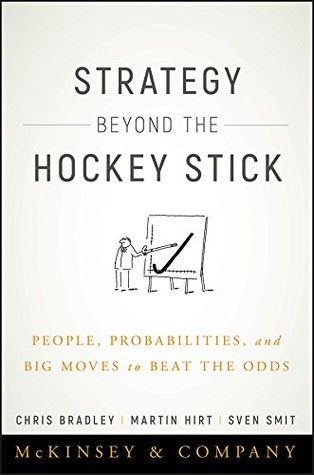
Strategy Beyond the Hockey Stick: People, Probabilities, and Big Moves to Beat the Odds by by Chris Bradley, Martin Hirt, Sven Smit

Book Review 5/5

Pedro Pinto's Reviews > Strategy Beyond the Hockey Stick: People, Probabilities, and Big Moves to Beat the Odds


Strategy beyond the Hockey Stick was a really pleasant surprise. Was expecting a book with some level of quality about strategy, coming from Mckinsey and Company, but got much, much more in this relative concise book (235 pages) that provides a clear framework on the key pillars that make a difference on your company performance and how a sound strategy process should be deployed.

It also presents the 10 key levers. divided in 3 broad categories, that one should be aware if he wants to make his company progress on the power curve distribution of value generation.

Consequently, this is a must-read book for every manager, whatever the ranking you currently have!

Unbundling the aforementioned, below you can find my insights divided in 2 key topics:

a) Assessment of your current strategic process, that leads into the following conclusions (any similarity with your reality is not a coincidence):

1- A cumbersome process that ends in a minimum 150 pages power point presentation that does not add much to the organization and business discussion.

2- A document / process that is not used to openly discuss the current business environment and to make key decisions, but to support and defend the current "status-quo" or the special project of a business unit, where every manager tries to maximize their own utility, and not a process to optimize the utility of the overall company. Each department makes a 20/30-minute presentation where there is no open discussion, but an exposure of what a division/area leader wants to share with the others (hockey sticks are the norm).

Subscribe now

3- A 150 page is produced that does not take into consideration the outside view, i.e. what are the macro-trends, what competition is doing (game theory), a strong PESTEL analysis is not done, and different scenarios are presented and is completely skewed to an "Inside View" with lot of details, but low value-added to the discussion.

4- Opaque document with no clear definition of the 3/5 big moves a company should pursue to achieve outstanding results, but just a maintenance of the status-quo and hoping that the macro environment tails the organization to a better performance vs. last year.

5- Non-value-added process to the organization, a missed opportunity with huge opportunity costs associated, with several Hockey Sticks where after an initial investment period the results will increase almost exponentially (unfortunately when you do a follow up of such plans, we usually see a graveyard of hairy-back outcomes),

6- Strongly biased process where you can usually find: (i) Halo Effect, (ii) Anchoring, (iii) Confirmation Bias, (iv) Champion Bias, and (v) Loss Aversion.

7- A document that proposes that the company will do a lot better next year, continuing to the same of this year.

8- A document that does not recognizes uncertainty in the market (ranges of predictive values vs. 1 number forecast), lacks a proper baseline to start the assessment, there are errors in performance attribution (good performance is always attributed to good management and bad performances to market conditions), amongst others.

Share

b) How can you change that reality?

1- Define the correct yardstick to manage your company performance. Choose the Economic Profit indicator while assessing your business. With that you ensure that you are properly measuring all the costs in your company, including the Cost of Capital, and with that you are generating value to your shareholders and the overall company. How many companies just measure their performance vs. EBIT or other financial performance indicator that just has an internal perspective into consideration.

2- Using this metric, we can clearly see that value creation distribution across industries is a power curve, that follows power laws principles, i.e. the tails of the value distribution curve raise or fall exponentially. You can see that behavior in several other data sets, like in economics, demographic, and nature. The companies on the top-quintile of the distribution capture >90% of the value created, thus you should strive to be there.

3- You should be cognizant that 50% of your company positioning on the power curve comes from your industry, thus it would be easier to be an average company in a great industry that an exceptional company in an average industry. However, you can find companies from several industry in the top 10% of the distribution.

Leave a comment

4- In order to move on the Value Power curve, you need to: (i) grow your business top-line and (ii) improve the ROIC. Only by playing with these 2 factors you will be able to improve your Economic Profit significantly.

5- You should be able to provide and determine probabilities to each strategic initiatives recognizing that some have a success probability of 90% but with limited and reasonable improvements on your ROIC and Top Line and others that have a lower probability of success (lets say 50%) but with huge payoffs. You should then measure and pay your managers accordingly with this probability framework and not treat all challenges the same way.

6- There are 3 key categories that make the difference in the Value Power curve distribution and should be addressed in your strategic process that are: Endowment (what you start with), Trends (what are the winds in your industry) and Moves (what will you do).

7- There are 10 key levers you can use to move along the value power curve distribution, that can be allocated as follows within the 3 categories:

Endowment: (i) Size of your company in terms of Total Revenue- the larger the better; (ii) Debt Level - the less debt you have the better you are prepared to seize the opportunities, (iii) Past Investment on R&D - you need to be on the top half of your industry in the ration R&D investment to Sales.

Trends: (i) Industry Trend - what is your industry average economic profit; (ii) Geographical Trend - to be present in key to growth geographical markets in terms of nominal GDP growth.

Moves: (i) Programmatic M&A - steady stream of deals to add value (investments and divestures); (ii) Dynamic Allocation of resources - ability to re-allocate resources within Business Units, (iii)Strong Capital Expenditures - to be above significantly above the industry average; (iv)Productivity Programs - reduce overheads and or improve labor productivity; (v)Improvements on differentiation - Business model innovation and pricing power.

8- Promote 8 key shifts in your strategic process: (i) from Annual Planning to Strategy as journey, (ii) from getting to a Yes to debating real alternatives, (iii) from peanut butter resource allocation to resource allocation to your 3/5 priorities, (iv) from approving budgets to making big moves; (v) from budget inertia to liquid resources; (vi) from sandbagging to open risk portfolios; (vii) from you are your numbers to holistic perspective on performance, (viii) from long-range planning to forcing the first step.

Subscribe now


Hopefully, you can now understand my strong recommendation and rating of this insightful book.


from Risk Premium https://ift.tt/32Rx0hm
via IFTTT

How can you tell if a football manager is actually good at their job? and How can you tell if CEO is actually good at their job?

Another great article by John Muller, from The Athletic,” on how we can draw a line between good football managers, the ones that add value to innate talent of a team vs. the ones that destroy it. A great question when we see the England national team talent vs. performance and other teams (but we will let concrete examples aside). Only counting the trophies won cannot be a good way to assess it, due to all the externalities and macro impacts that play an outsized role in a team’s winning capacity. John has proposed a model that takes into consideration the squad strength (innate value), based on players market values, and for the value that the manager brings, he uses a 70/30 of non-penalty expected goal difference and actual goal difference the teams generate. The results are compelling! 80% of team success are explained from the squad strength and only 20% would come from what the manager brings (team’s performance). So main conclusion is the very relative role a manager plays in the overall outcomes, but still 20% can make a huge difference between winning or losing a trophy (see picture below). If the model would hold, this would be a great to assess the quality of a manager, thus the ability to draw the line between values added ones, value neutral or value destroying ones. Unfortunately, the model does not hold from season to season, thus a value-added coach does to transfer that result to the next season (stability problem). Although not stable, still think that this is the way to make such kind of analysis, most probably we did not find the correct independent variables to properly assess it but is a starting point and there is the need to have more data (although a manager career is not that long, to provide most probably all the data points one would require). Moving this problem to the corporate world, where we see CEOs and Directors with such an income premium due to the value they “bring” to the organization and recognizing that also at corporate level the success or failure of company is >80% tied to the external environment (trends), this should also be a method to proper assess upper-management value added into an organization and select/paying them accordingly, otherwise most of the time it looks like we are on a rent-seeking scenario! If a CEO gets paid $10m/year, are we sure that he is generating at least the $10m of added value plus a premium, vs the best alternative? Something to think about for a future work (academic or consulting), but i really think there is a lot to improve there! https://www.nytimes.com/athletic/5392417/2024/04/07/good-manager-how-to-tell/

- Pedro

Read on Substack

7/12/2024

70 Libros para el Verano, Por Babélia -> El Pais

70 libros para leer este verano: las recomendaciones de los expertos de ‘Babelia’ - El Pais! VIAJES Accidentada vida de un anticuario, D. G. Hogarth. Traducción de Raquel Bahamonde Barreiro Menorca, la isla soñada, Xavier Moret Viaje a un mundo olvidado, Jordi Esteva NARRATIVA EN ESPAÑOL El niño, Fernando Aramburu. Tarántula, Eduardo Halfon En El Pensamiento, César Aira Aurora Q., Mario Cuenca Sandoval. En las manos, el paraíso quema, Pol Guasch. Traducción de Carlos Mayor Asmodeo, Rita Indiana NARRATIVA TRADUCIDA La revelación, A. M. Homes. Traducción de Mauricio Bach Dr. NO, Percival Everett. Traducción de Javier Calvo Biografía de X, Catherine Lacey. Traducción de Núria Molines Galarza Cuchillo. Meditaciones tras un intento de asesinato, Salman Rushdie. Traducción de Luis Murillo Font Cuentos incompletos, T. C. Boyle. Traducción de Ce Santiago Diamantes, Esther Singer Kreitman. Prólogo y traducción de Rhoda Henelde y Jacob Abecasís NOVELA NEGRA Las furias, John Connolly. Traducción de Vicente Campos González El cazador, Tana French. Traducción de Antonio Lozano Sagrera. Golpe de gracia, Dennis Lehane. Traducción de Aurora Echevarría Pérez. CIENCIA FICCIÓN Las huellas del sol, Walter Tevis. Traducción de Rubén Martín Giráldez. Al final de la oscuridad, Sequoia Nagamatsu. Traducción de Ainize Salaberri. La bahía del espejo, Catriona Ward. Traducción de Cristina Macía Orio AUTOFICCIÓN Circuito cerrado de vigilancia, Mayte Gómez Molina. Caminar por aguas cristalinas en una piscina pintada de negro, Cookie Mueller. Traducción de Rodrigo Olavarría La última frase, Camila Cañeque AUTO / BIOGRAFÍAS La playa, Marina Perezagua Ensayo general, Milena Busquets Un corazón furtivo, Xavier Pla. Traducción de Ana Ciurans Ferrándiz, Olga García Arrabal y Francesc Ribes. POESÍA Cuánto dura cuanto, María Eloy-García Estrellas vivas. Antología de poesía cursi, Edición de Berta García Faet y Juanpe Sánchez López. Varios autores La rosa sanguínea, H. D. Thoreau. Traducción de Carlos Jiménez Arribas. Ilustraciones de Esther Muntañola. PENSAMIENTO La consagración de la autenticidad, Gilles Lipovetsky. Traducción de Cristina Zelich Somos libres de cambiar el mundo. Pensar como Hannah Arendt, Lyndsey Stonebridge. Traducción de Sion Serra Lopes. Desplazar la luna. Mi noche en el Museo de la Acrópolis, Andrea Marcolongo. Traducción de Juan Rabasseda Gascón y Teófilo de Lozoya ¿Quién teme a Francisco Franco?, Daniel Rico. El arte de encender las palabras, Berta García Faet. La ligereza, Juan Cárdenas CRÓNICA La llamada. Un retrato, Leila Guerriero Nocturno de tenis. Rododendros #1, Luis Torres de la Osa Bartleby y yo. Retratos de Nueva York, Gay Talese. Traducción de Antonio Lozano Sagrera HISTORIA Primavera revolucionaria, Christopher Clark. Traducción de Eva Rodríguez Halffter Miradas sobre la desigualdad, Branko Milanovic. Traducción de Jordi Ainaud i Escudero El aroma de los imperios. Chanel nº 5 y Moscú Rojo, Karl Schlögel. Traducción de Francisco Uzcanga Meinecke. España diversa. Claves de una historia plural, Eduardo Manzano Moreno Ni una, ni grande, ni libre, Nicolás Sesma La herencia de Eva. Del instinto de curiosidad a la ciencia moderna, Carmen Estrada POLÍTICA La dictadura de la minoría, Steven Levitsky y Daniel Ziblatt. Traducción de Guillem Gómez Sesé. El imperio zombi, 47) El imperio zombi Mira Milosevich Claves de política global, Dirección de Carlos Corrochano. Varios autores La llamada, Jesús Ceberio España, el pacto y la furia,Enric Juliana España, Michael Reid. Traducción de Albino Santos Mosquera ARTE Los cítricos. Un viaje a través de la historia y del arte, Salvador Zaragoza Adriaensens. Delante de Las Meninas, Emilio Cendón Gris. El color de la contemporaneidad, Peter Sloterdijk. Traducción de Isidoro Reguera MÚSICA George Harrison. Beatle a su pesar Temporada de brujas. El libro del rock gótico, Cathi Unsworth. Traducción de Héctor Castells. María Dolores Pradera. Déjame que te cuente,Felipe Cabrerizo y Santiago Aguilar. TEATRO En mitad de tanto fuego, Alberto Conejero Altsasu, María Goiricelaya CÓMIC Step by Bloody Step, Simon Spurrier, Matias Bergara y Matheus Lopes. Traducción de Ignacio Bentz Se está muy sola en el centro de la tierra, Zoe Thorogood. Traducción de Gema Moraleda Goiter, Josh Pettinger INFANTIL Uno y siete, Gianni Rodari. Ilustraciones de Beatrice Alemagna. Traducción de Xosé Ballesteros Todo lo que pasó antes de que llegaras, Yael Frankel Un tiburón en la bañera, David Machado. Ilustraciones de Paulo Galindro. Traducción de Rita da Costa. JUVENIL Blackwater, Michael McDowell. Criaturas imposibles, Katherine Rundell. Traducción de Isabel Murillo Fort Lo que los libros de Historia del Arte no quieren que sepas, Blanca Guilera AUDIOLIBRO Sobre el anarquismo, Noam Chomsky. Traducción de Alejandro Gibert Abós. Voz de Arturo Mercado Jr Fruto, Daniela Rea Gómez. Voces de Daniela Rea Gómez, Lorena de la Torre, Rosa Vázquez, Annie González, Dalia de la Peña, Jimena Guerra y Karen Basurto. Buenas lecturas de Verano! https://elpais.com/babelia/2024-06-28/70-libros-para-leer-este-verano-las-recomendaciones-de-los-expertos-de-babelia.html

- Pedro

Read on Substack

6 books one can read in 1 day, by the Economist

Another books recommendation from the Economist, in this case books that you can read in 1 or 2 days. Six Records of a Floating Life. By Shen Fu. Oranges. By John McPhee A Room of One’s Own. By Virginia Woolf. Iphigenia in Forest Hills: Anatomy of a Murder Trial. Ways of Seeing. By John Berge A Man’s Place. By Annie Ernaux. Happy summer readings! https://www.economist.com/the-economist-reads/2024/05/31/six-non-fiction-books-you-can-read-in-a-day?itm_source=parsely-api

- Pedro

Read on Substack

Starting new book -> How to Decide: Simple Tools for Making Better Choices by Annie Duke

Starting a new book! How to Decide: Simple Tools for Making Better Choices by Annie Duke “…Through a blend of compelling exercises, illustrations, and stories, the bestselling author of Thinking in Bets will train you to combat your own biases, address your weaknesses, and help you become a better and more confident decision-maker. What do you do when you're faced with a big decision? If you're like most people, you probably make a pro and con list, spend a lot of time obsessing about decisions that didn't work out, get caught in analysis paralysis, endlessly seek other people's opinions to find just that little bit of extra information that might make you sure, and finally go with your gut. What if there was a better way to make quality decisions so you can think clearly, feel more confident, second-guess yourself less, and ultimately be more decisive and be more productive? Making good decisions doesn't have to be a series of endless guesswork. Rather, it's a teachable skill that anyone can sharpen. In How to Decide, bestselling author Annie Duke and former professional poker player lays out a series of tools anyone can use to make better decisions. You'll learn: • To identify and dismantle hidden biases. • To extract the highest quality feedback from those whose advice you seek. • To more accurately identify the influence of luck in the outcome of your decisions. • When to decide fast, when to decide slow, and when to decide in advance. • To make decisions that more effectively help you to realize your goals and live your values. Through interactive exercises and engaging thought experiments, this workbook helps you analyze key decisions you've made in the past and troubleshoot those you're making in the future. Whether you're picking investments, evaluating a job offer, or trying to figure out your romantic life, How to Decide is the key to happier outcomes and fewer regrets. …” https://www.goodreads.com/book/show/51066664

- Pedro

Read on Substack

Finalized -> How to Take Smart Notes: One Simple Technique to Boost Writing, Learning and Thinking - Book Rating 2.5/5

Finalized How to Take Smart Notes: One Simple Technique to Boost Writing, Learning and Thinking → by Sönke Ahrens Book Rating - 2.5 / 5 Must confess was expecting more, but still several good advice. The Slip-Box concept still find it difficult to conceptualize and fully grasp its full advantages. Review to come shortly. “… The key to good and efficient writing lies in the intelligent organisation of ideas and notes. This book helps students, academics and other knowledge workers to get more done, write intelligent texts and learn for the long run. It teaches you how to take smart notes and ensure they bring you and your projects forward. The Take Smart Notes principle is based on established psychological insight and draws from a tried and tested note-taking technique: the Zettelkasten. This is the first comprehensive guide and description of this system in English, and not only does it explain how it works, but also why. It suits students and academics in the social sciences and humanities, nonfiction writers and others who are in the business of reading, thinking and writing. Instead of wasting your time searching for your notes, quotes or references, you can focus on what really counts: thinking, understanding and developing new ideas in writing. ...” https://www.goodreads.com/book/show/60581868

- Pedro

Read on Substack