12/02/2023

Book → Getting to Yes: Negotiating Agreement Without Giving In → Roger Fisher, William L. Ury, Bruce Patton → Quotes & Ideas


“…Any method of negotiation may be fairly judged by three criteria: It should produce a wise agreement if agreement is possible. It should be efficient. And it should improve or at least not damage the relationship between the parties. (A wise agreement can be defined as one that meets the legitimate interests of each side to the extent possible, resolves conflicting interests fairly, is durable, and takes community interests into account.) …”


A new way to predict ship-killing rogue waves And a way to figure out how, exactly, AI works its magic

 A great article from the Economist and a must read for all Data professionals.


Starting from a known problem (how to predict rogue waves), it addresses the black-box problem that comes with AI that conduces to a lack of confidence to the decision makers and present a great solution to make AI more understandable, insightful and trustable, all based in a paper published in Proceedings of the National Academy of Sciences by Dion Häfner.


Simply amazing…


https://www.economist.com/science-and-technology/2023/11/22/a-new-way-to-predict-ship-killing-rogue-waves

Book Rating - 5/5 -> The Signal and the Noise: The Art and Science of Prediction by Nate Silver

Must read → Review to come shortly!


The Signal and the Noise: The Art and Science of Prediction by Nate Silver

Starting a new book (negotiation)→ Getting to Yes: Negotiating Agreement Without Giving In -> Roger Fisher, William L. Ury, Bruce Patton

"...Getting to Yes has helped millions of people learn a better way to negotiate. One of the primary business texts of the modern era, it is based on the work of the Harvard Negotiation Project, a group that deals with all levels of negotiation and conflict resolution.

Getting to Yes offers a proven, step-by-step strategy for coming to mutually acceptable agreements in every sort of conflict. Thoroughly updated and revised, it offers readers a straight- forward, universally applicable method for negotiating personal and professional disputes without getting angry-or getting taken. ..."


Book - The Signal and the noise - Silver → Quotes & Ideas

 On how to differentiate the signal and the noise

“…Distinguishing the signal from the noise requires both scientific knowledge and self-knowledge: the serenity to accept the things we cannot predict, the courage to predict the things we can, and the wisdom to know the difference.!* …”


11/20/2023

Invest like the best → With Brad Jacobs

Good podcast with several useful takeaways for the investor and for the corporate world.

Really like the:

1. ROIC concept as a north star for every business decision (i prefer the FCFF, however at the end if both done right would lead to the same results) - due its simplicity and common-sense,

2. as important as to find a good business opportunity what you pay for it is paramount (IC of ROIC),

3. create the environment so people can strive in their role,

4. the extreme importance to have the right persons in the right places and,

5. invest only when you have an industry and technology tailwind!


Invest like the best


Enjoy!

ps - book added to the wish list. 


My guest today is Brad Jacobs. Brad’s resumé is remarkable. He has founded seven companies, all of which are billion-dollar or multibillion-dollar businesses. He has done 500 M&A transactions and raised $30 billion dollars of debt and equity capital. Currently, he is the Executive Chairman of XPO, a commercial trucking company that he started in 2011 and has grown into one of the largest logistics businesses in the world. He has also written a book that will be out in January, titled “How to Make a Few Billion Dollars”. Brad’s energy is infectious and our conversation unpacks his strategies for M&A, his propensity for speed, and methods for earning team buy-in. Please enjoy my conversation with Brad Jacobs.

Book - The Signal and the noise - Silver → Quotes & Ideas

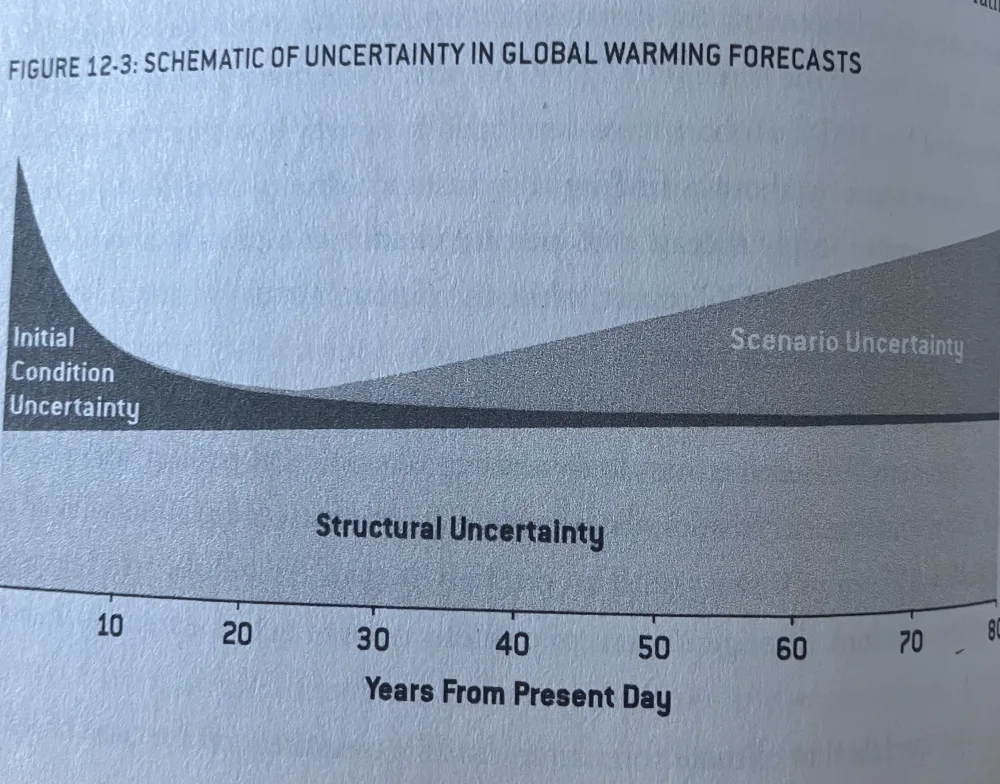
 3 types of Uncertainty in Forecasts - using Global Warming as an example.


First, there is what Schmidt calls initial condition uncertainty-the short-term factors that compete with the greenhouse signal and impact the way we experience the climate. The greenhouse effect is a long-term phenomenon, and it may be obscured by all types of events on a day-to-day or year-to-year basis.

 -----------------------------------------------------------------------------------------------------

Another type of uncertainty, however-what Schmidt calls scenario uncertainty- increases with time. This concerns the level of CO, and other greenhouse gases in the atmosphere. At near time horizons, atmospheric composition is quite predictable. The level of industrial activity is fairly constant, but CO, circulates quickly into the atmosphere and remains there for a long time. (Its chemical half-life has been estimated at about thirty years)

--------------------------------------------------------------------------------

Last, there is the structural uncertainty in the models. This is the type of uncertainty that both climate scientists and their critics are rightly most worried about, because it is the most challenging to quantify. It concerns how well we understand the dynamics of the climate system and how well we can represent them mathematically. Structural uncertainty might increase slightly over time, and errors can be self-reinforcing in a model of a dynamic system like the climate.