1/11/2026

What Caught My Attention This Week

This week, I decided to start a review of the things that caught my attention over the past week and that I think are worth sharing with you.

The plan is to make this a weekly or biweekly feature (still to be defined).

Some of these may resonate with you as well.

A few of the items I share here may later evolve into full posts.

Subscribe now

Currently reading:

1- Ethics by Benedict de Spinoza:

A profoundly beautiful and uniquely insightful description of the universe, Benedict de Spinoza's Ethics is one of the masterpieces of Enlightenment-era philosophy.

Published shortly after his death, the Ethics is undoubtedly Spinoza's greatest work - an elegant, fully cohesive cosmology derived from first principles, providing a coherent picture of reality, and a guide to the meaning of an ethical life. Following a logical step-by-step format, it defines in turn the nature of God, the mind, the emotions, human bondage to the emotions, and the power of understanding - moving from a consideration of the eternal, to speculate upon humanity's place in the natural order, the nature of freedom and the path to attainable happiness. A powerful work of elegant simplicity, the Ethics is a brilliantly insightful consideration of the possibility of redemption through intense thought and philosophical reflection. The Ethics is presented in the standard translation of the work by Edwin Curley. This edition also includes an introduction by Stuart Hampshire, outlining Spinoza's philosophy and placing it in context.

2- On War by Carl von Clausewitz:
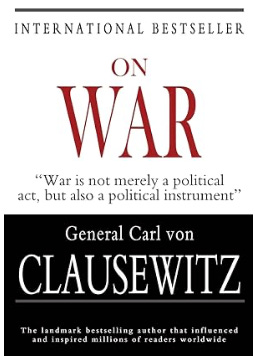
Clausewitz had many aphorisms, of which the most famous is, "War is not merely a political act, but also a political instrument, a continuation of political relations, a carrying out of the same by other means," a working definition of war which has won wide acceptance.

Share


Podcasts that I found interesting

1- Reed Hastings - Building Netflix

2- The future of intelligence with Demis Hassabis

3- The arrival of AGI with Shane Legg

4- 10 yeats of Acquired (with Michael Lewis)

5- Sin noticias de Gurb

6 - Joan of Arc - Warrior Maid

7- Wagner: Live at the Royal Albert Hall

8- How to make a few more billion dollars: Brad Jacobs

9- Film club: our sci-fi favourites - https://ift.tt/048IMtE

10- Unfinished business (part 1): quantum physics turns 100

https://ift.tt/tlax9rk

11- Unfinished business (part 2): fixing the “biggest problem” in physics

https://ift.tt/CmBZeSE

12- A conversation with Binyamin Netanyahu

https://ift.tt/HPBmhkQ

13- The technologies to watch in 2026

https://ift.tt/K2HUN5u

14- How is AI changing warfare?

https://ift.tt/Luvfd0n

Leave a comment


Articles that I found interesting

1- Your Analytics team is dead man walking

Three Data Point Thursday
Your Analytics Team Is Dead Man Walking.
Read more

2- Highest-Paid Athletes in the World: Comparing Salary/Winnings with Endorsements


Videos that I found interesting

1- Panel Data Regression Tutorial

2- Chimamanda Ngozi Adichie, escritora. Desde África con amor

3- HPI 25: ‘Context is King’ When Interpreting Premier League Match Demands - Dr. Paul Bradley

https://ift.tt/O5ID9Mm


Movies videos that I found interesting

1- The Amateur


That’s it for this week. If any of these caught your attention—or if you’ve come across something worth sharing—feel free to reply or leave a comment.


from Risk Premium https://ift.tt/DCVjuyO
via IFTTT

The Art of Intelligence

Intelligence is like trying to assemble a 1,000-piece puzzle when you only have 250 of the correct pieces. On top of that, you’re surrounded by 5,000 pieces from other puzzles that do nothing but create noise. And yet, based on this incomplete and messy picture, you’re expected to provide an educated opinion on the subject.

A few months ago, I watched a MasterClass on The Art of Intelligence that I found extremely insightful. I took away several valuable “knowledge nuggets” that helped me better structure and challenge my thinking on this topic—and that I’ve since been able to apply to my day-to-day work.

Subscribe now

Below are my notes. Hopefully, they may also be of value to you.

1. What is analysis?

Analysis is not speculation or opinion. Analysis means systematically reviewing all available information, identifying what is relevant, and determining how it fits together to provide insight on a subject. In other words: which puzzle pieces matter, and how do they connect.


2. Sources of intelligence

There are two primary sources of intelligence:

  1. Human (people)

  2. Technical


3. Human vs. technical intelligence

Technical intelligence is important—mandatory, even. However, a good human source of intelligence will always outperform purely technical sources. The key is not access, but quality: the source must be reliable, informed, and credible.

Share


4. Relationships as a core skill

A defining trait of strong intelligence craftsmanship is the ability to build relationships with key people who can provide relevant and valid insights. This requires trust, which is built by using information consciously, correctly, and responsibly.


5. The importance of listening

Listening is a critical skill. You must:

  • Ask the right and most pertinent questions

  • Actively listen to what people—or the data—are telling you

Avoid forcing feedback to fit a pre-existing narrative. As a rule of thumb, follow the WAIT principle:
Why Am I Still Talking?


6. Building meaningful relationships with sources

  • Build trust through patience

  • Listen with undivided attention

  • Apply the WAIT principle

  • Avoid purely transactional relationships

  • Understand the other person’s challenges and motivations


7. Understanding deceit

Establish a baseline behavior for when human sources are telling the truth. As with lie detection techniques, truthful behavior tends to show low variance and consistent patterns. Deception, by contrast, often introduces higher variance, making patterns harder to maintain and identify.

Leave a comment


8. Creating a safe analytical environment

Create space for honest opinions within your team by:

  • Selecting the right people (avoid “yes-men”)

  • Giving your opinion last

  • Asking junior colleagues to speak first


9. Bias awareness

  • Acknowledge that everyone has biases—and understand their impact

  • Be especially alert to anchoring, confirmation, pendulum, groupthink, and mirroring biases

  • Always express conclusions with an explicit confidence level

  • Beware of compounding bias effects

  • Always factor in the motivations of your sources


10. Managing risk and uncertainty

  • Always keep the risk/uncertainty matrix in mind

  • Identify as many risks and uncertainties as possible

  • Develop mitigation plans for each

  • For more refer to my note:


11. Presenting your conclusions

  • Build personal, timely, and close resonance with the decision-maker

  • Use accessible language—even for complex or technical topics

  • Tailor your message to the decision-maker’s preferred decision-making process


Conclusion

Intelligence is not about having perfect information—it’s about making sense of imperfection. It requires discipline over instinct, listening over speaking, and humility over certainty. The real craft lies in knowing which puzzle pieces matter, which ones are noise, and how our own biases shape the picture we think we see.

Strong intelligence work is ultimately human work. Trust, relationships, and judgment matter as much as tools and technology. By creating safe spaces for dissent, questioning our assumptions, and clearly communicating uncertainty, we don’t just improve our analysis—we improve the quality of the decisions that follow.

In a world overloaded with data, the advantage belongs not to those who know the most, but to those who think the clearest.

(text revised by a LLM)


from Risk Premium https://ift.tt/FQYaKjP
via IFTTT

1/06/2026

Are We Living Inside a Sci-Fi Movie Already?

Are you a fan of sci-fi movies? Or are you curious about dystopian—or almost dystopian—visions of the future? If so, I highly recommend listening to a great episode of Babbage, the science podcast by The Economist. In it, The Economist’s science correspondents share their favorite sci-fi films—and it’s a fantastic list. Here are the movies they mentioned, along with my own thoughts: 1- Blade Runner (1982) My favorite movie ever. A timeless exploration of identity, technology, and what it means to be human. I also strongly recommend the sequel, Blade Runner 2049, which is surprisingly excellent. https://www.imdb.com/title/tt0083658/ 2- Ghost in the Shell Still on my watch list. There’s also a newer live-action version starring Scarlett Johansson, which has sparked mixed reactions. Curious to see how both compare. https://www.imdb.com/title/tt36934560/ 3- The Martian I’ve seen it and liked it—though it didn’t leave a lasting impression on me. Still, a solid and optimistic take on science and problem-solving. https://www.imdb.com/title/tt3659388/ 4- Dune (1984) I’ve watched it, but I much prefer the recent adaptation. That said, I would have loved to see the legendary version envisioned by Alejandro Jodorowsky, which was never made. https://www.imdb.com/title/tt0087182/ 5- Tenet I’ve already seen it, but it didn’t really make a mark. I might give it another try—some films demand a second viewing. https://www.imdb.com/title/tt6723592/ 6- The Matrix I really liked it. When I saw it for the first time, it made a huge impact on how I thought about reality, technology, and control. https://www.imdb.com/title/tt0133093/ 7- Colossus: The Forbin Project On my watch list. An early and unsettling take on AI, control, and unintended consequences—still very relevant today. https://www.imdb.com/title/tt0064177/ https://www.economist.com/podcasts/2025/12/24/film-club-our-sci-fi-favourites

- Pedro

Read on Substack

1/05/2026

Reseña de libro - El inversor inteligente, de Benjamin Graham

Reseña de libro - El inversor inteligente, de Benjamin Graham Mi valoración - 4/5 (Cualitativa - “Me ha gustado mucho”) “El inversor inteligente es un realista que vende al optimista y compra al pesimista.” He leído este libro porque me ha sido recomendado por diversos amigos, conocidos, autores y publicaciones que leo habitualmente. Confieso que mis expectativas eran altas y que una pregunta importante subyacía en mi mente antes de empezar: ¿Qué puede aportarme un libro sobre inversión que vaya más allá de lo que ya he estudiado y aprendido en mi Master in Science in Finance o en la preparación de los distintos niveles del CFA Institute? Tras terminarlo (más de 850 páginas), puedo asegurar que ha sido una muy buena inversión —en este caso, de tiempo— y estoy convencido de que he aprendido mucho. No tanto en términos técnicos (es un libro bastante accesible para un lector medianamente informado en finanzas e inversiones), sino en cómo abordar la lógica y la filosofía de la inversión desde una perspectiva holística, apoyándose en principios fundamentales (first principles) que todo inversor debería interiorizar si aspira a tener éxito en ese arte que es invertir en los mercados financieros. No encontrarás soluciones ni fórmulas mágicas, pero sí principios orientadores clave que, aplicados a tus conocimientos de finanzas, negocio, estrategia y gestión de recursos, te permitirán desarrollar una estructura sólida para la toma de decisiones. Principales premisas que me llevo del libro 1 .Distinción clara entre inversor y especulador. El inversor realiza un análisis exhaustivo ex ante del activo que va a comprar y, basándose en dicho análisis, considera que existe una alta probabilidad de preservar el capital y obtener un rendimiento adecuado al riesgo asumido. 2 .El inversor debe limitarse a activos de empresas relevantes, con un historial prolongado de resultados positivos y una situación financiera sólida. 3 .Para obtener de forma consistente resultados superiores a la media del mercado (alpha), es necesario seguir políticas que inviertan en valores sólidos y prometedores que no gocen de gran popularidad en el momento de la inversión. 4 . La inflación es una variable clave, tanto por su impacto en la valoración de los títulos como por su efecto en la rentabilidad de la actividad de la empresa analizada. 5 .Un inversor inteligente jamás debe prever el futuro basándose exclusivamente en la extrapolación del pasado. 6 .El valor de cualquier inversión es —y siempre será— una función del precio al que se adquiere. 7 .El rendimiento del mercado de valores depende de tres factores: a) Crecimiento real (beneficios y dividendos) b) Crecimiento nominal derivado de la inflación c) Crecimiento de la especulación 8 .Es fundamental vigilar métricas globales de valoración del mercado (PER, CAPE, etc.). PER superiores a 15 y valoraciones por encima de 1,5 veces el valor contable neto son señales de alerta. 9 .El rendimiento alcanzado está directamente relacionado con la cantidad de esfuerzo que el inversor está dispuesto —y es capaz— de dedicar a la inversión (diferencia entre inversor pasivo y “emprendedor”). 10 .Un inversor no debería tener más del 50 % de su cartera en acciones. Solo en casos muy excepcionales, y con una convicción profunda basada en datos y análisis rigurosos, esta regla debería incumplirse. 11 .Cinco reglas para invertir en acciones: a) Diversificación adecuada, pero no excesiva b) Invertir únicamente en empresas de gran tamaño y con financiación conservadora c) Priorizar empresas con historial de pago de dividendos d) Imponer reglas ex ante sobre el precio máximo de compra e) Limitar la exposición a empresas de alto crecimiento (o incluso excluirlas) 12 .El inversor trabaja siempre con una mentalidad de largo plazo. 13 .Es imprescindible tener en cuenta los costes de transacción, lo que favorece carteras más estables. 14 .El inversor debe centrar su atención en grandes empresas que, por razones coyunturales, atraviesan periodos de impopularidad. 15 .Un inversor debe tener muy claro qué puede controlar y qué no. Entre las variables controlables están: a) Precio de compra b) Costes de intermediación c) Costes de cartera d) Expectativas sobre los resultados e) Optimización fiscal f) Su propio comportamiento en el mercado 16 .Aprovechar y analizar toda la información disponible: leer memorias anuales, prestar atención a lo que se dice off the record y, sobre todo, a las notas a los estados financieros. 17 .Factores clave para valorar un título: a) Perspectivas de largo plazo (económicas, políticas, sociales, demográficas, etc.) b) Equipo directivo c) Fortaleza financiera y estructura de capital d) Historial de dividendos e) Pay-out 18 .Antes de invertir, realizar una simulación aplicando la estrategia de forma virtual y validar los resultados potenciales. En definitiva, El inversor inteligente no es solo un libro sobre inversión, sino un tratado sobre disciplina, paciencia y pensamiento independiente. En un entorno dominado por el ruido, la inmediatez y la búsqueda constante de rendimientos rápidos, Graham nos recuerda que invertir con éxito es, ante todo, un ejercicio de carácter. Su mensaje sigue plenamente vigente: quien sea capaz de controlar su comportamiento, respetar los principios fundamentales y aceptar que el mercado no siempre es racional, tendrá una ventaja estructural a largo plazo. Por ello, más que una lectura puntual, este libro es una referencia a la que merece la pena volver periódicamente. (texto revisado por un LLM) https://www.goodreads.com/review/show/5847484850

- Pedro

Read on Substack