2/20/2026

Making Space for ‘I’m Sorry’ and owning up to your mistakes

Making Space for ‘I’m Sorry’ A must-see: a balanced, sensible, and well-structured statement on this subject — the best I’ve heard so far. “If he said something as bad as what he said, I would still hope there’s room for someone to apologize and say, ‘I’m sorry — I made a huge mistake.’” (text revised llm) https://youtu.be/fuVMzJBzLhI?si=bCJBKOWc_8cEygX_

- Pedro

Read on Substack

The Art of Noticing Everyday Life

The Art of Noticing Everyday Life The Map of Tiny Perfect Things A good movie to watch with your pre-teen kids. An easy, entertaining storyline — but when you finish it and reflect on it, you realize how many good messages it conveys. The allegory of living the same day is nothing more than an extreme replica of how we live our lives every day — the routine, the inability to see what’s around us, and even to notice the tiny, perfect things we should enjoy and cherish each and every day. We become so inward-looking that we are completely blind to them. Finally, it also touches on the pain and the path you need to go through when you lose someone dear and close to you. A good combo, I would say, to watch with your kids — or with the kid inside you 🙂 (text revised by a llm) https://www.primevideo.com/detail/0OJWTXRLI9TEU0I224FZAIHQBS/ref=atv_dp_share_cu_r

- Pedro

Read on Substack

2/18/2026

"It’s hard to compete against someone who’s just there to have fun"

"It’s hard to compete against someone who’s just there to have fun" A great podcast with Peter Steinberger, the creator and mastermind of OpenClaw, that I strongly advise everyone to listen to (>3 hours at normal speed). It really nudged me to take a step forward and embrace agentic AI without looking back. I will invest a significant part of my leisure time (at least for now) in this topic and also try to have fun building tools/models/stuff leveraging my domain expertise and improving them, AND enjoying the journey. https://youtu.be/YFjfBk8HI5o?si=kqSMob780alfWEUW

- Pedro

Read on Substack

2/17/2026

13/20… Would You Do Better?

13/20… Would You Do Better? AI videos… can you spot the difference? Are you sure? The latest models really make it hard — almost impossible — to identify what’s real and what isn’t. Have a read and take the test. I did, and I was only able to spot 13/20 (which seems to be better than average). That said, even the ones I got right were, in most cases, 50/50 or just slightly better — but not by much. Next time you see a video, activate your critical thinking. Validate the sources and double-check — what you think you saw might not be real. Imagine what can be done, for good and for bad, with this technology. https://runwayml.com/research/theturingreel

- Pedro

Read on Substack

2/16/2026

“…AI didn’t kill analytics. It killed analytics middlemen. …”

“…AI didn’t kill analytics. It killed analytics middlemen. …” When the business user can seamlessly — or with very low friction — navigate data through an LLM, ask relevant questions in natural language, and quickly receive highly accurate answers (instead of waiting days or weeks for feedback from the Analytics team), several things will/are happening: Up to 80% of the analytical work as we know it becomes vulnerable. The traditional task of translating business questions into SQL (or other query languages) and present a BI tool to retrieve and provide answers will increasingly be absorbed by AI. Only the top 20% of analysts will truly thrive. These are the ones who deeply understand the business, grasp the causality behind key variables, and know how to ask the right questions — not just the technically correct ones. Decision-making speed will increase significantly. With fewer intermediaries validating data and generating insights, organizations will reduce the cost of making decisions (which is different from the value of the decision itself). The number of analysts will likely decrease substantially. Translator tasks will be automated by AI. However, the analysts who remain will generate multiple times more value than before. Why? Because they will focus less on querying and more on: Framing the right problems Making recommendations Validating assumptions Running scenarios Assigning probabilities to outcomes Connecting insights to business impact In short, they will move from reporting to providing Intelligence. For a deeper perspective on this shift, I strongly recommend reading the well-designed article by Tree Data Point Thursday.

- Pedro

Read on Substack

2/15/2026

Football: Physical, Cognitive, Psychological

Football: Physical, Cognitive, Psychological Who doesn’t like a good confirmation bias coming their way—especially when it’s backed by a scientific study? For several years now, I’ve been convinced that to be a great football player, athleticism and coordination are just as important as cognitive abilities and personality traits. The paper in the link, “Decoding the elite soccer player’s psychological profile,” presents an extensive study using a robust set of validated psychological tests across several domains, combined with advanced statistical techniques. It shows that elite football players tend to have: 1-Heightened planning and memory capacities. 2-Enhanced executive functions—especially cognitive flexibility—as well as higher levels of conscientiousness, extraversion, and openness to experience. 3-Lower levels of neuroticism and agreeableness. Football is played across three equally important domains: physical, cognitive, and psychological. Of course, I haven’t looked for studies that might prove me wrong 😊—so for now, I’ll fully enjoy my confirmation bias. P.S. I plan to look more closely at how they applied neural network features to the psychological variables to obtain and interpret their results. The approach seems both interesting and potentially applicable to other fields of study. https://www.pnas.org/doi/10.1073/pnas.2415126122?sma=lanewsletterdekikollaneras_2026.02.13&utm_medium=email&utm_source=newsletter&utm_campaign=lanewsletterdekikollaneras_2026.02.13

- Pedro

Read on Substack

2/14/2026

Structured Thinking

Structured Thinking I came across The Classical Mind Substack article by chance, and it was such a pleasure to read. I’ve always been interested in this topic, as I’ve long felt that my note-taking skills were, at best, subpar — especially when it came to truly benefiting from my notes later on. I constantly faced the dilemma of making them either too extensive or too concise. Most of the time, I couldn’t properly use my notes and had to return to the original source just to make sense of them. Reading this article felt like seeing all the struggles I’ve experienced over time clearly identified and thoughtfully explained through the different methods presented. The “Classical Notes” sheet, in particular, made perfect sense to me. I strongly relate to the method and its approach, and it convinced me that this is something I should genuinely try. I’ve now subscribed to the Substack, and I’m confident you’ll find something valuable in it as well.

- Pedro

Read on Substack

The Birth Equation

The Birth Equation A good friend recently drew my attention to a website that offers a simple exercise — yet one with many layers: If you were born again, how would your life change on average? Every minute, 251 people are born around the world. Spin the globe and see where you might be born — and you’ll begin to understand what your life could look like in terms of: 1-Life expectancy 2-Child mortality 3-Median income 4-Expected years of schooling 5-Passport power 6-Democracy index Then compare those figures with what you can expect by living in your own country. Sounds like a simple exercise? Now start peeling it like an onion. Reflect on each of these dimensions and the dynamics behind them. It will make you pause and think about many things we often take for granted. I hope you enjoy this simple yet powerful exercise as much as I did. https://www.givingwhatwecan.org/birth-lottery

- Pedro

Read on Substack

2/13/2026

Europe’s AI Opportunity: From Regulation to Execution

You don’t have to be America or China to win in AI, says Rishi Sunak https://www.economist.com/by-invitation/2025/07/16/you-dont-have-to-be-america-or-china-to-win-in-ai-says-rishi-sunak From The Economist “As work by Jeffrey Ding of George Washington University shows, the countries that benefit most from these technologies are not necessarily the ones that develop them first, but the ones that adopt them most widely.” I couldn’t agree more with Rishi Sunak’s vision. In this new AI-driven world, the winners will not simply be the inventors — they will be those who adapt fastest and integrate the technology most effectively. It is, in many ways, a 21st-century version of Darwinism. Not survival of the strongest, but again the survival of the most adaptable. Those who integrate this new paradigm into their day-to-day lives — individuals, companies, and nations — will be the ones who succeed. And in this context, Europe has a real opportunity to position itself far more strongly in the emerging global order than many assume. I am often reminded of a quote from a McKinsey presentation on AI implementation in the corporate world: “For every dollar you spend on technology, you should spend five on change management.” Technology alone is not transformation. Adoption is. Culture is. Leadership is. There are rare moments in history that fundamentally reshape the next 50 years. We are living through one of them. Building on the path outlined by Sunak, Europe should focus above all on implementation. Regulation matters — but it must remain a support function, not the driving force. If the legal and regulatory mindset becomes the primary lens through which we approach AI in Europe, we risk missing a historic opportunity. This is not just about competitiveness. It is about rebalancing global power, strengthening Europe’s voice, and increasing the wellbeing of all Europeans. Being proud that our regulation sets the benchmark is not enough if, at the same time, we inadvertently limit our own capacity to innovate and scale. The time to think strategically is now. Let’s not waste it. (text revised by a llm)

- Pedro

Read on Substack

2/12/2026

Resilience at Europe’s Edge

An interesting article by Euronews on the economic growth of the Iberian countries — Portugal and Spain. While their performance is not extraordinary, they can still be considered relative outliers within the European context. It’s encouraging to see this development in Iberia. At the same time, it serves as a cautionary reminder of how subdued and fragile growth remains across much of the rest of Europe. If you’re interested in the topic, follow the link below. (text revised by a llm) https://www.euronews.com/business/2026/01/30/why-are-spain-and-portugal-growing-twice-as-fast-as-the-eurozone

- Pedro

Read on Substack

The Path That Is Most Right

“…I have always taken the path that feels most right. The result is never in question for me — only the path you choose to get there. And there is always one that is most right….” The 2014 film A Most Violent Year was a pleasant surprise. It’s a finely crafted movie built around a compelling storyline and richly developed characters. The film immerses you in the business entanglements of a newcomer trying to establish himself in a highly consolidated industry, crowded with players tied to New York City’s criminal underworld. If you’re looking for a strong story, excellent performances, and sharp dialogue, look no further — this is a film well worth your time. (text revise by a llm) https://www.primevideo.com/region/eu/detail/0RE7FX2RDNWT1KHVKZB26OO03M/ref=atv_dp_share_cu_r

- Pedro

Read on Substack

2/10/2026

When Reality Outdoes Dystopia

Reality sometimes surpasses the most extreme far-fetched dystopian novel.... "If he does the job that he's capable, we can grow at 15%. I think more than that." https://x.com/FoxNews/status/2021195305354428607?s=20

- Pedro

Read on Substack

AI False Positives: Signal vs. Noise

AI is everywhere. In a business context, it feels like every 50 words you read or write, “AI” shows up. But is everything really AI—or are we stretching the term beyond usefulness? This is where the book AI Snake Oil seems valuable. It helps distinguish between what is genuinely pushing the frontier—truly transformative, domain-shifting work—and the vast majority (probably 80%+) of so-called “AI,” which is often just existing tools repackaged under a shinier label: econometrics, statistics, optimization, rules-based systems, and the like. I’ve added the book to my wishlist. Before you decide for yourself, you can also listen to this podcast with the author, which offers a solid preview of the argument. https://podcasts.apple.com/es/podcast/thinkers-ideas/id1450867110?i=1000679081055

- Pedro

Read on Substack

Sphere Surface

Great visual explanation on how to calculate a sphere surface

- Pedro

Read on Substack

2/09/2026

Why This Beethoven Episode Is Worth Your Time

Want to learn more about Beethoven in a way that’s funny, well-crafted, and genuinely educational? Then don’t miss this episode of The Rest Is History, made in collaboration with the Academy of St Martin in the Fields and the Philharmonia Chorus. I really enjoyed it—smart, lively, and surprisingly engaging. I hope you enjoy it as much as I did. (text revised by llm) https://podcasts.apple.com/es/podcast/the-rest-is-history/id1537788786?i=1000682151030

- Pedro

Read on Substack

2/08/2026

The Great Gatsby: Twenty Years Later

The Great Gatsby: Twenty Years Later I had only a mild, foggy memory of reading The Great Gatsby by F. Scott Fitzgerald more than twenty years ago, and of not being particularly impressed by it at the time. Last week, I watched Baz Luhrmann’s film adaptation, and it came as a complete surprise—I realized I didn’t remember a single thing about the story. The film rekindled my interest, and I decided to give the novel another try, as it’s very likely that I—or rather, my younger self—was not able to fully appreciate it back then. As for the movie, I can only recommend it. In an era dominated by reruns, sequels, and the like, it serves as a reminder of how rewarding a truly good story, well told through cinema, can be—and how well spent that time is (something I had almost forgotten). (text revised by a llm) https://www.imdb.com/title/tt1343092/ https://www.primevideo.com/region/eu/detail/0QX5MQ08A4LKK891EPLIYQN2UA/ref=atv_dp_share_cu_r

- Pedro

Read on Substack

In Memory of Professor John Hull

In Memory of Professor John Hull It was with a surprisingly sad and melancholic feeling that I read the news of Professor John Hull’s passing. Not because he was ever my professor, nor because I had the privilege of knowing him personally, but because he has been part of my life for a long time—mainly through his published textbooks, especially Options, Futures, and Other Derivatives (7th Edition). That book enabled me to understand, both conceptually and from a mathematical point of view, what options are and how they can be valued. In doing so, it allowed me to develop my MSc thesis, “Capital Structure Active Management – A Contingent Claim Approach.” For all of this, I offer my heartfelt thanks to Professor Hull, along with my deepest and most sincere condolences to his family. (text revised by a llm) https://repositorio.ucp.pt/entities/publication/25708e4b-dcc0-4130-bd90-e1468c28b7ee https://amzn.eu/d/0iHuM08g https://www.rotman.utoronto.ca/news-events-and-ideas/news-and-stories/2026/january2026/remembering-professor-john-hull/

- Pedro

Read on Substack

IA y matemáticas: cuando la máquina acelera la ciencia

IA y matemáticas: cuando la máquina acelera la ciencia https://elpais.com/ciencia/cafe-y-teoremas/2026-01-05/repensando-las-matematicas-en-la-era-de-la-inteligencia-artificial.html “Por ello, la inteligencia artificial multiplica el alcance del experto, pero, en manos del principiante, puede limitarse a amplificar su ruido.” Artículo muy interesante de El País sobre cómo la inteligencia artificial puede ayudar en el desarrollo del conocimiento y de la ciencia, en particular en el ámbito de las matemáticas. En mi opinión, la IA —hasta prueba en contrario— servirá como un asistente (o cien) que realice todas las comprobaciones necesarias y exhaustivas de las demostraciones y teoremas generados por los científicos, acelerando así el proceso científico por un factor de diez. Además, podrá identificar, a partir de grandes volúmenes de datos ruidosos, patrones y conjeturas (extraer señal de datos muy ruidosos) que serían muy difíciles de detectar para un humano o que requerirían muchísimo tiempo. “Del diálogo entre matemáticas e IA podrían nacer tecnologías más transparentes y fiables y una mejor comprensión de cómo razona la máquina. Impulsar el encuentro entre estas dos disciplinas, tanto en el ámbito empresarial como en la investigación básica, es, por tanto, una tarea urgente. Y esta sinergia solo puede prosperar con un apoyo fuerte y sostenido a ambas áreas por separado.”

- Pedro

Read on Substack

2/07/2026

Why NOAA Matters More Than You Think

The first time I read about NOAA (the National Oceanic and Atmospheric Administration) was in The Fifth Risk by Michael Lewis (see my note with a short review below), which details what was done to the agency during Trump’s first administration. This news doesn’t surprise me at all. There is clearly much more here than meets the eye, and the consequences are significant. Somewhat surprisingly, the impact will be felt across all of American society—but it will hit Trump’s own voter base particularly hard, which never ceases to amaze me. I recommend taking a few minutes to read this NASA article; it provides an excellent perspective on what this all entails, especially in the context of the climate-change reality we are currently living in. (text revised by a llm) https://substack.com/@pedrosantospinto/note/c-118088045?utm_source=notes-share-action&r=13q5fd https://www.space.com/the-universe/earth/trump-administrations-noaa-layoffs-affected-the-space-weather-service-that-tracks-solar-storms?lrh=03f1438c92c72183949125dd49c074a04610b96b9cf6b57c817d1e3de0af792e

- Pedro

Read on Substack

Six Love Stories Recommended by The Economist

Six of the best films about love https://economist.com/culture/2025/02/12/six-of-the-best-films-about-love from The Economist The Economist recommends 6 movies about love: 1- Bridget Jones’s Diary (2001) 2- Brokeback Mountain (2005) 3-Casablanca (1942) 4-Past Lives (2023) 5-A Star Is Born (2018) 6-When Harry Met Sally(1989) Must confess that just saw 2 out of the 6 (#1 & #3) but have added all to watch list.

- Pedro

Read on Substack

2/06/2026

Turning Data into Actionable Insights: A Lesson from Football

https://www.hudl.com/blog/hpi-25-dr-paul-bradley Can there be a better way to think about data, statistics, and the importance of context when generating insights and defining action plans than applying them to football? Not for me 🙂 It’s the perfect combo. This excellent presentation by Paul Bradley does exactly that. It starts by showing how data can be transformed into information and then into (good) insights. But the real magic happens when context is added: suddenly, those insights come to life, are enriched to a completely different level (×10), and—most importantly—become actionable. Invest 25 minutes of your time—you won’t regret it. If, like me, you slip into a state of flow, you’ll not only learn how these ideas apply to football, but you’ll also find yourself stepping back, taking a deep breath, and reflecting on how to apply them to your own field (even if it’s not sports-related). You’ll be surprised by how much you can take away. Hope you enjoy it as much as I did! (text revised by a llm)

- Pedro

Read on Substack

2/05/2026

Is Malthus Right in Burundi?

Burundi is running out of space https://www.economist.com/middle-east-and-africa/2026/01/04/burundi-is-running-out-of-space From The Economist “…Not far from Mr Nduwumwami lives Ezechiel Niyibizi, in abject conditions. His father and uncles fought over the family’s meagre land; after his father died, he was left with nothing. The local government helped him get a tiny house, with an earth floor, and a plot of land ten metres long and wide. When he cannot find waged work, his children sleep hungry….” That sentence made me stop. I took a deep breath and read it again. It still landed like a punch to the stomach. Is Thomas Malthus’s prediction — that “the power of population is indefinitely greater than the power of the earth to produce subsistence” — becoming a reality in Burundi? With 14 million people living in an area not much larger than Wales, even the advances that allow farmers to adopt more intensive and innovative agricultural practices may not be enough. This is something we, in our cozy and comfortable lives, rarely think about. But it is something we should be aware of — and something we should not look away from. (text revised by a llm)

- Pedro

Read on Substack

2/03/2026

When Loss Diminishes Our Collective Knowledge

Nuno Loureiro hoped to replicate the energy of the Sun https://www.economist.com/obituary/2026/01/08/nuno-loureiro-hoped-to-replicate-the-energy-of-the-sun From The Economist All lives are unique, special, and important. However, there are some individuals whose loss is felt more deeply because of what they might have achieved in their field of knowledge and the potential impact they could have had on the lives of others. It seems that Nuno’s death is one such case (few Portuguese are featured in The Economist’s obituary section). I did not know Nuno Loureiro before the fateful event of his murder or before reading this obituary. Yet, after reading it, I paused to reflect on how many events like this—events no one can fully explain or understand—are diminishing our collective knowledge. To his family and friends, my deepest condolences. Hopefully, others will follow in his footsteps in the study of reliable fusion energy. (text revise by a llm)

- Pedro

Read on Substack

2/01/2026

Siete ideas sencillas para entender la inteligencia artificial

Un artículo muy bueno de El País (Kiko Llaneras) explica de una forma muy sencilla cómo funciona la inteligencia artificial y cuáles son sus diferencias con la inteligencia humana en 7 lecciones: 1- Las máquinas pueden aprender A través de prueba y error va ajustando sus parámetros, ejecutando un proceso larguísimo y a veces opaco, pero que no es magia. 2- La IA tiene habilidades emergentes Ejecutando el proceso presentado en el punto 1 millones de veces, la IA es capaz de detectar sarcasmo y otras formas subjetivas de expresarse sin que nunca se le haya explicado lo que eso significa (lo mismo se aplica a las reglas de gramática de una lengua). 3- La IA aprende con una “evolución cutre” Necesita millones de ejemplos para aprender lo que a un niño le bastan dos o tres ejemplos para entender de qué se trata. 4- Hemos automatizado la cognición Absorbe una cantidad descomunal de conocimiento y aprende los procesos que llevan a utilizar ese conocimiento en problemas reales, viendo cómo se han resuelto antes situaciones concretas (búsqueda de patrones en la resolución de problemas). 5- La IA es más intuitiva que racional Utiliza casi siempre el Sistema 1 de pensamiento (véase Daniel Kahneman, Thinking, Fast and Slow). 6- Los humanos también somos patrones Nuestra forma de pensar, como es sabido, aplica continuamente heurísticas para simplificar la solución de problemas complicados, por lo que a veces no somos tan distintos. 7- Vivimos una explosión cámbrica de la IA Estamos atravesando un período de crecimiento rápido, diverso y disruptivo de la inteligencia artificial, comparable a la Explosión Cámbrica en biología (un momento, hace unos 540 millones de años, en el que aparecieron muchísimas formas de vida nuevas en muy poco tiempo). Espero que disfruten tanto como yo su lectura. (texto revisado por llm) https://elpais.com/ideas/2026-01-25/como-piensa-una-inteligencia-artificial-la-gran-sorpresa-es-que-intuye.html?sma=lanewsletterdekikollaneras_2026.01.30_2&utm_medium=email&utm_source=newsletter&utm_campaign=lanewsletterdekikollaneras_2026.01.30_2

- Pedro

Read on Substack

The Hidden Rules of Sports Betting: Who Wins, Who Gets Blocked

The battle to stop clever people betting https://www.economist.com/christmas-specials/2025/12/18/the-battle-to-stop-clever-people-betting From The Economist An inside look at the sports-betting industry, where you can be classified as a “sharp”—a highly skilled player who is often restricted in your betting—and a “whale”—a big-time loser who is more than welcome to play. Highly skilled players, who know when and what to bet to exploit mispriced odds on the platforms, are profiled based on specific criteria, chased, and restricted in their betting ability. This skews the market and significantly improves the platform’s profitability… (I even wonder if it’s legal to prevent the market from working freely…). I also learned that some people make a living from this activity—and that there are sophisticated schemes, often in legal gray areas, designed to bypass these restrictions. Welcome to the highly profitable world of sports betting! Buckle up and enjoy the ride. (text revise by a llm)

- Pedro

Read on Substack

Rediscovering Adam Smith: Insights from The Economist on 250 Years of Wealth of Nations

Adam Smith is misinterpreted and his influence overstated https://www.economist.com/christmas-specials/2025/12/18/adam-smith-is-misinterpreted-and-his-influence-overstated From The Economist A great piece on Adam Smith by The Economist, using the 250th anniversary of his most famous book, An Inquiry into the Nature and Causes of the Wealth of Nations, as a leitmotif. “It is not from the benevolence of the butcher, the brewer, or the baker, that we expect our dinner, but from their regard to their own interest.” In a striking article, it downplays the relative importance of what is actually mentioned in the book versus what has been widely attributed to it. It seems the invisible hand is not explicitly explained or applied to the pricing mechanism as we understand it today, but used in other contexts. Smith also introduces other concepts, such as the “impartial spectator”—an inner monologue or third-party perspective that judges our actions. However, it seems Smith occasionally gets economics “wrong,” for example in the labor theory of value or his discussion/partially support of the Navigation Acts, against free trade mechanisms (as he did acknowledge some secondary benefits, like the growth of the shipping industry). Nonetheless, although it does not seem like easy reading, the article has sparked my interest in finally tackling this book, as well as his earlier major work, The Theory of Moral Sentiments, both of which have been patiently waiting on my bookshelf. (text revise by a llm)

- Pedro

Read on Substack

Standing on the Shoulders of Giants: What Newton Achieved by 26

A great 10-minute explanation of who is the brightest mind in recorded history—Isaac Newton—and why. What have accomplished by 26, standing on the shoulders of all the great minds who came before you? 🙂 Whenever you need a reality check about your achievements, or current challenges, or someone you read on the papers, come back to this video—it provides an immediate sense of perspective and catharsis. Neil deGrasse Tyson, on top of being a brilliant scientist, is also a fantastic communicator, just like his mentor Carl Sagan. https://youtu.be/xKwlp1Ap9XA?si=5PE5VEp9IP1y5lYR

- Pedro

Read on Substack

For Kids, Parents, and the Kid in You

What if the best way to learn about history is by playing with it? https://www.economist.com/christmas-specials/2025/12/18/what-if-the-best-way-to-learn-about-history-is-by-playing-with-it From The Economist Do you have kids—or maybe a kid still alive inside you? Do they (or you) spend countless hours playing games? If the answer to any of these is yes, why not make some of that time educational too? There are plenty of games that can help kids—and adults—learn about specific fields of study. History is the focus of this article, but the same idea applies to other areas of science and knowledge as well. Why not turn playtime into a learning opportunity? It’s a simple way to benefit both you and your kids, without sacrificing fun. Games I’ll be keeping an eye on (especially when they go on promotion): 1- Europa Universalis 5 (eu5) 2- Crusaders Kings 3- Victoria Series 4- Hearts of Iron 5-Imperator:Rome 6- The Civilization 7-Total Wars and remember “When it comes to education, there is no substitute for learning by doing. To teach children Spanish, have them speak it. To teach them art, give them paper and paints. Plenty of tech titans got their start by playing around on a computer in their youth.”

- Pedro

Read on Substack

A Call That Aged Well

After the inspiring and assertive speech by Mark Carney in Davos, I remembered that I had posted something about him following an interview he gave to The Economist, 3 months ago. It is really rewarding to see that my assessment at the time turned out to be right. (text revised by a llm) My linkedin post back in November Great interview with Prime Minister Mark Carney.I must confess, I was genuinely impressed by his performance and his vision for the country.This is clearly linked to his extensive expertise in economics and his previous roles as Governor of both the Bank of Canada and the Bank of England.As I was listening, I thought to myself: here’s a politician I can truly understand — someone who speaks clearly, sounds reasonable, and demonstrates real knowledge of the issues at hand. https://www.economist.com/insider/the-insider/zanny-minton-beddoes-interviews-mark-carney https://www.linkedin.com/posts/pedrospinto_bonus-episode-zanny-minton-beddoes-interviews-activity-7382474995127529473-asPr?utm_source=share&utm_medium=member_desktop&rcm=ACoAAAD8SDIBEeUyeyA2_0sAKh3TRFMPtKOI5AA

- Pedro

Read on Substack

Un encuentro con Vivaldi en Madrid

El pasado finde (24 de enero) tuve la oportunidad de asistir a Las Cuatro Estaciones de Vivaldi, entre otras obras, en el Auditorio Nacional de Música de Madrid, interpretadas por Délica Chamber Orchestra. Fueron dos horas de puro disfrute musical. Ver en vivo el virtuosismo de las músicas de Délica Chamber Orchestra me deleitó con su interpretación y me transportó a otro mundo, a otra realidad y a otro entorno. Un universo solo mío, donde el bullicio del día a día desapareció y solo existíamos la música y yo. Sea cual sea vuestra preferencia musical, de espectáculo o de hobby, os aconsejo encarecidamente que saquéis tiempo de vuestro día para dedicarlo a ello. https://delicachamber.com/about/ https://open.spotify.com/album/2bP8L39GYpPSN2wnNqTJJr?si=RQi3L8sfTYCZBp1Vdt7RLA https://auditorionacional.inaem.gob.es/es/programacion/excelentia-vivaldi-las-cuatro-estaciones

- Pedro

Read on Substack

Curious About the Human-Dog Connection? Start Here

How wolves became dogs https://www.economist.com/christmas-specials/2025/12/18/how-wolves-became-dogs From The Economist “The only, absolute and best friend a man has, in this selfish world, the only one that will not betray or deny him, is his dog.” Do you have an interest in dogs and want to understand how this almost unique symbiosis between humans and dogs was formed? Look no further and read this insightful article. It doesn’t provide all the answers, but it offers solid intel and opens the door for future research if you want to explore this path “Pet dogs are proliferating, too. Half of American households (65m of them) include a dog, and dog food is a multi-billion-dollar industry. The best friendship in zoology shows little sign of coming to an end” (text revised by a llm)

- Pedro

Read on Substack

Just Finished Michael Lewis’ MasterClass on Storytelling

Just finished the MasterClass with Michael Lewis on how to tell a great story. I took away several valuable insights on communication and how to effectively get your ideas across. Hopefully, in the not-too-distant future, I’ll put together a full post on everything I learned. (text revise by a llm) https://youtu.be/9EhRoVj0kfE?si=gQwASd15zLLsDHob

- Pedro

Read on Substack

Filosofía, inteligencia y más: lo mejor de José Antonio Marina

Muy interesante episodio de Aprendemos Juntos con José Antonio Marina sobre filosofía, inteligencia ¡y mucho más! Espero que lo disfruten tanto como yo. José Antonio Marina reflexiona sobre la capacidad humana de orientarse en un mundo complejo, cambiante y lleno de incertidumbre. Para él, pensar con claridad, elegir con sentido y actuar con responsabilidad es la base de una vida más consciente y justa. Reivindica la filosofía como un servicio público imprescindible. Una disciplina que nos ayuda a distinguir la verdad de la mentira, a evaluar nuestras creencias y a desarrollar pensamiento crítico frente a la manipulación, la desinformación y los discursos simplificadores que nos rodean. José Antonio Marina es filósofo, ensayista y pedagogo, referente internacional en el estudio del pensamiento y la educación. Ha dedicado su trayectoria a comprender cómo aprendemos, decidimos y actuamos. Su obra conecta filosofía, ética y pedagogía con los retos del mundo contemporáneo. https://youtu.be/tRPCqO5UT7U?si=utQN6XPC_h9lyZmH

- Pedro

Read on Substack

Autonomy vs. Power: A Trade-Off Worth Rethinking

Highly recommend this podcast with Jeffrey Pfeffer for its many sharp insights into organizational behavior. In particular, the trade-off between autonomy and power stood out and gave me a lot to think about. https://youtu.be/5YAvw0VzB_E?si=19ouqiK02AXPENHa

- Pedro

Read on Substack

The Case for Structured Job Interviews (and Their Limits)

How to conduct a job interview https://www.economist.com/business/2025/12/18/how-to-conduct-a-job-interview From The Economist “…If you had to construct a really bad way to make an important decision, you might come up with something like the stereotypical job interview….” An interesting article by The Economist on job interviews, which reinforces—once again—that the most effective approach is the structured job interview, with two important caveats: 1-Structured interviews mean using a standardized set of job-related questions asked of every candidate, with responses evaluated against an agreed scoring system. 2-Even when well designed, job interviews—even if structured—are far from perfect predictors of on-the-job performance. They should therefore be complemented with other tools such as personality assessments, work samples, and thorough reference checks (the latter, from my own experience, being particularly valuable). “…if you are interviewing a stranger for a job, it is best done with a script, a scoring system and a hefty dose of realism….” (text revised by a llm)

- Pedro

Read on Substack

Are Western Fertility Rates Really Collapsing—or Are We Measuring Them Wrong?

Very interesting article by The Economist on fertility rates across the West over the past few decades. The commonly accepted view is that fertility has fallen significantly below the replacement rate (2.1 children per woman), implying that population decline in these regions is inevitable in the not-so-distant future. This article argues that the gap may not be as large as it appears, and that part of the issue lies in how the phenomenon is measured. In a nutshell, it comes down to the difference between Total Fertility Rate (TFR) and Completed Fertility Rate (CFR)—and how each is calculated. Put simply, the first indicator (TFR), which is the most widely cited, does not account for the fact that women are having children significantly later than in the past. This “tempo effect” skews results toward more dramatic declines. The second indicator (CFR) corrects for this timing issue. While it still shows a decline compared to the past, it is far less severe than what TFR suggests. From a data science perspective, this is a useful reminder: you always need to understand how your KPIs are constructed before interpreting trends. Otherwise, you risk mistaking timing effects for genuine macro-level shifts. The “sentient lizards” parable used to introduce and explain these concepts is a small masterpiece. Highly recommended reading. (text revised by a LLM) Watch who you’re calling childless https://www.economist.com/finance-and-economics/2025/12/18/watch-who-youre-calling-childless From The Economist

- Pedro

Read on Substack

The best podcasts of 2025 by the Economist

The best podcasts of 2025 https://www.economist.com/culture/2025/12/18/the-best-podcasts-of-2025 From The Economist Do you listen to podcasts? If yes, here’s a list of the ones the Economist considers the best for 2025. Needless to say, they all went straight into my “potential” playlist. I’ll give each one a try, and I’m almost certain that—like in previous years—some will earn a spot on my official rotation. 1- Articles of Interest 2- Final Thoughts: Jerry Springer 3- Fela Kuti: Fear No Man 4-Flesh and Code 5-Heavyweight 6-Missing in the Amazon 7-Past Present Future: Politics on Trial 8-The Protocol 9-Shell Game 10-The Wargame Hope it is helpful. (text revised by a llm)

- Pedro

Read on Substack

The Innovations That Could Change Lives—If We Notice Them

Sometimes you stumble upon articles that almost go unnoticed—even by you—and then, somehow, they resurface in your mind weeks or months later. This is one of them. A group of MIT engineers developed a new water-desalination system designed specifically for groundwater, powered almost entirely by solar energy and, crucially, without relying on batteries or the electric grid. The real breakthrough lies in how the system manages energy. Traditional desalination requires a steady, constant power supply. This new approach allows the process to automatically adapt its energy consumption to the amount of solar power available at any given moment during the day. At the time of publication, the system was able to adjust its operation within a three-minute window, dynamically matching energy use to sunlight. As of December 2024, the system was already sourcing about 77% of its required energy directly from solar panels—an improvement of roughly 91% compared to previous designs. The researchers believe they could reach close to 100% solar operation by reducing the adjustment window from minutes to second-by-second control. The potential impact of this technology is enormous. Imagine being able to provide affordable, desalinated drinking water to thousands of communities around the world that currently face severe water scarcity or lack reliable access to clean water altogether. Hopefully, this kind of innovation will move from prototype to widespread deployment in the near future—and, in doing so, meaningfully improve the lives of millions of people. It also makes you reflect on how many people are quietly working on deeply impactful R&D efforts—projects that, if successful, could transform living conditions for so many—yet remain largely unnoticed by the rest of the world. (text revised by a llm) https://news.mit.edu/2024/solar-powered-desalination-system-requires-no-extra-batteries-1008

- Pedro

Read on Substack

1/11/2026

What Caught My Attention This Week

This week, I decided to start a review of the things that caught my attention over the past week and that I think are worth sharing with you.

The plan is to make this a weekly or biweekly feature (still to be defined).

Some of these may resonate with you as well.

A few of the items I share here may later evolve into full posts.

Subscribe now

Currently reading:

1- Ethics by Benedict de Spinoza:

A profoundly beautiful and uniquely insightful description of the universe, Benedict de Spinoza's Ethics is one of the masterpieces of Enlightenment-era philosophy.

Published shortly after his death, the Ethics is undoubtedly Spinoza's greatest work - an elegant, fully cohesive cosmology derived from first principles, providing a coherent picture of reality, and a guide to the meaning of an ethical life. Following a logical step-by-step format, it defines in turn the nature of God, the mind, the emotions, human bondage to the emotions, and the power of understanding - moving from a consideration of the eternal, to speculate upon humanity's place in the natural order, the nature of freedom and the path to attainable happiness. A powerful work of elegant simplicity, the Ethics is a brilliantly insightful consideration of the possibility of redemption through intense thought and philosophical reflection. The Ethics is presented in the standard translation of the work by Edwin Curley. This edition also includes an introduction by Stuart Hampshire, outlining Spinoza's philosophy and placing it in context.

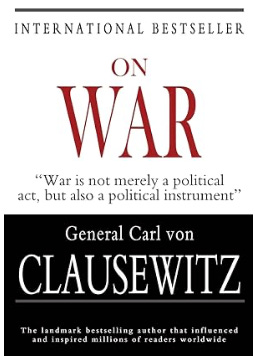
2- On War by Carl von Clausewitz:

Clausewitz had many aphorisms, of which the most famous is, "War is not merely a political act, but also a political instrument, a continuation of political relations, a carrying out of the same by other means," a working definition of war which has won wide acceptance.

Share


Podcasts that I found interesting

1- Reed Hastings - Building Netflix

2- The future of intelligence with Demis Hassabis

3- The arrival of AGI with Shane Legg

4- 10 yeats of Acquired (with Michael Lewis)

5- Sin noticias de Gurb

6 - Joan of Arc - Warrior Maid

7- Wagner: Live at the Royal Albert Hall

8- How to make a few more billion dollars: Brad Jacobs

9- Film club: our sci-fi favourites - https://ift.tt/048IMtE

10- Unfinished business (part 1): quantum physics turns 100

https://ift.tt/tlax9rk

11- Unfinished business (part 2): fixing the “biggest problem” in physics

https://ift.tt/CmBZeSE

12- A conversation with Binyamin Netanyahu

https://ift.tt/HPBmhkQ

13- The technologies to watch in 2026

https://ift.tt/K2HUN5u

14- How is AI changing warfare?

https://ift.tt/Luvfd0n

Leave a comment


Articles that I found interesting

1- Your Analytics team is dead man walking

Three Data Point Thursday
Your Analytics Team Is Dead Man Walking.
Read more

2- Highest-Paid Athletes in the World: Comparing Salary/Winnings with Endorsements


Videos that I found interesting

1- Panel Data Regression Tutorial

2- Chimamanda Ngozi Adichie, escritora. Desde África con amor

3- HPI 25: ‘Context is King’ When Interpreting Premier League Match Demands - Dr. Paul Bradley

https://ift.tt/O5ID9Mm


Movies videos that I found interesting

1- The Amateur


That’s it for this week. If any of these caught your attention—or if you’ve come across something worth sharing—feel free to reply or leave a comment.


from Risk Premium https://ift.tt/DCVjuyO
via IFTTT

The Art of Intelligence

Intelligence is like trying to assemble a 1,000-piece puzzle when you only have 250 of the correct pieces. On top of that, you’re surrounded by 5,000 pieces from other puzzles that do nothing but create noise. And yet, based on this incomplete and messy picture, you’re expected to provide an educated opinion on the subject.

A few months ago, I watched a MasterClass on The Art of Intelligence that I found extremely insightful. I took away several valuable “knowledge nuggets” that helped me better structure and challenge my thinking on this topic—and that I’ve since been able to apply to my day-to-day work.

Subscribe now

Below are my notes. Hopefully, they may also be of value to you.

1. What is analysis?

Analysis is not speculation or opinion. Analysis means systematically reviewing all available information, identifying what is relevant, and determining how it fits together to provide insight on a subject. In other words: which puzzle pieces matter, and how do they connect.


2. Sources of intelligence

There are two primary sources of intelligence:

  1. Human (people)

  2. Technical


3. Human vs. technical intelligence

Technical intelligence is important—mandatory, even. However, a good human source of intelligence will always outperform purely technical sources. The key is not access, but quality: the source must be reliable, informed, and credible.

Share


4. Relationships as a core skill

A defining trait of strong intelligence craftsmanship is the ability to build relationships with key people who can provide relevant and valid insights. This requires trust, which is built by using information consciously, correctly, and responsibly.


5. The importance of listening

Listening is a critical skill. You must:

  • Ask the right and most pertinent questions

  • Actively listen to what people—or the data—are telling you

Avoid forcing feedback to fit a pre-existing narrative. As a rule of thumb, follow the WAIT principle:
Why Am I Still Talking?


6. Building meaningful relationships with sources

  • Build trust through patience

  • Listen with undivided attention

  • Apply the WAIT principle

  • Avoid purely transactional relationships

  • Understand the other person’s challenges and motivations


7. Understanding deceit

Establish a baseline behavior for when human sources are telling the truth. As with lie detection techniques, truthful behavior tends to show low variance and consistent patterns. Deception, by contrast, often introduces higher variance, making patterns harder to maintain and identify.

Leave a comment


8. Creating a safe analytical environment

Create space for honest opinions within your team by:

  • Selecting the right people (avoid “yes-men”)

  • Giving your opinion last

  • Asking junior colleagues to speak first


9. Bias awareness

  • Acknowledge that everyone has biases—and understand their impact

  • Be especially alert to anchoring, confirmation, pendulum, groupthink, and mirroring biases

  • Always express conclusions with an explicit confidence level

  • Beware of compounding bias effects

  • Always factor in the motivations of your sources


10. Managing risk and uncertainty

  • Always keep the risk/uncertainty matrix in mind

  • Identify as many risks and uncertainties as possible

  • Develop mitigation plans for each

  • For more refer to my note:


11. Presenting your conclusions

  • Build personal, timely, and close resonance with the decision-maker

  • Use accessible language—even for complex or technical topics

  • Tailor your message to the decision-maker’s preferred decision-making process


Conclusion

Intelligence is not about having perfect information—it’s about making sense of imperfection. It requires discipline over instinct, listening over speaking, and humility over certainty. The real craft lies in knowing which puzzle pieces matter, which ones are noise, and how our own biases shape the picture we think we see.

Strong intelligence work is ultimately human work. Trust, relationships, and judgment matter as much as tools and technology. By creating safe spaces for dissent, questioning our assumptions, and clearly communicating uncertainty, we don’t just improve our analysis—we improve the quality of the decisions that follow.

In a world overloaded with data, the advantage belongs not to those who know the most, but to those who think the clearest.

(text revised by a LLM)


from Risk Premium https://ift.tt/FQYaKjP
via IFTTT